

The landscape of hearing technology is shifting at a remarkable pace – Auracast has been just one such exciting development in recent years. AI, Deep Neural Networks, rechargeable batteries, new designs, and even new colours mean consumers now have far more options than ever before.
Add in miniaturisation and waterproofing, and we’ve come a long way from the days of massive beige bananas that would sit obtrusively behind ears, with thick tubing snaking from the aid to the ear canal. It might as well have been a big neon sign saying ‘look here’ compared to today’s slick, sleek and subtle hearing devices.
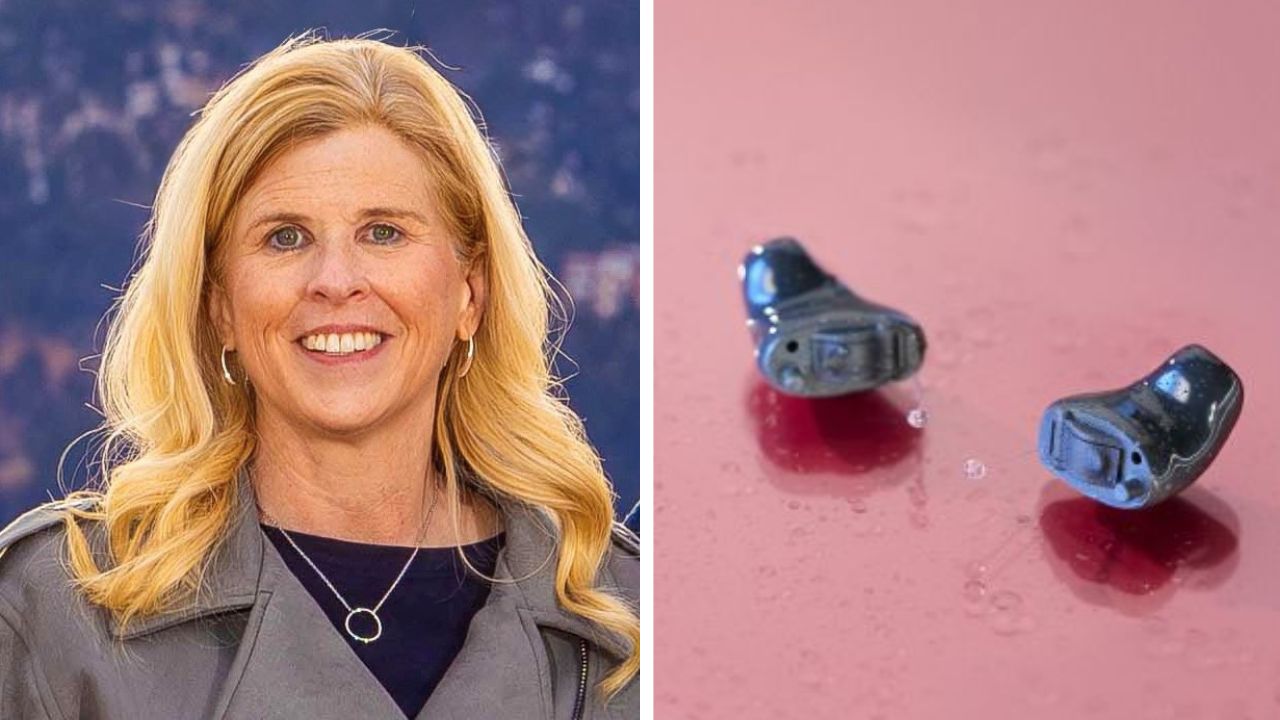
Laurel Christensen, GN Hearing’s Chief Audiology Officer, is excited about the changes. With more than 30 years of experience, she has seen the shift from analogue to digital hearing aids: in that time, the devices have grown more sophisticated, and we take much of that for granted. Whereas aids would once function as basic amplifiers, adjusted with miniature screwdrivers, early digital chips would enable selective amplification tailored to a patient’s audiogram, reduce wind noise, enhance music, and minimise background chatter. Now, aids are better, smaller, faster and more able to respond to the world around them.

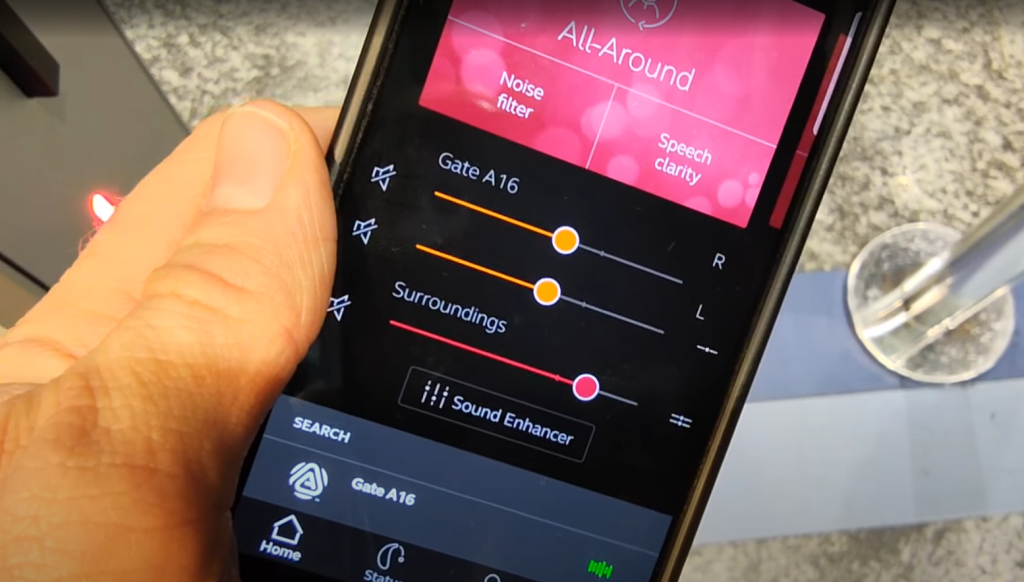
Looking back at her career, Laurel is astounded by the progress, particularly with the way hearing aids can connect to other devices. Back in 2010, GN was the first to install 2.4 GHz in hearing aids, meaning that those fitted with the ReSound Alera (as it was) could connect and receive high-quality sound directly from accessories, ending the need to wear a bulky intermediate device around their neck.
Four years later, it released the ReSound LiNX, the first hearing aids that were “Made for iPhone”. These devices allowed direct, high-quality audio streaming from iPhone, iPad, and iPod touch without intermediate devices: ASHA, the Android standard was still being worked on.
“It was because of forward-thinking engineers who said, ‘We need to connect to telephones and this is the frequency we need to be able to do that’,” Laurel says of the first digital innovations.
Now, most customers demand that their hearing aids pair with their mobile phones or televisions as standard, whether or not a bridging device is used. Auracast is the next step and will become a standard as the years progress. Laurel says connectivity has now become the third most desired feature in a hearing aid, marking a significant shift in user priorities: “I can remember a time where people did not care, now it has become expected: you have got to have good connectivity.”
The current momentum for Auracast marks an unprecedented shift in hearing health, and in a good way. The new technology is appearing everywhere, and the range of hearing aids that include it as standard is growing as the platform-neutral tech appears across manufacturers and devices.
“Everything with Auracast is moving much, much faster than I thought it would,” she says of its adoption. “It is impossible to track what is going on. Our sales reps are saying our TV Streamers are being plugged into soundboards at churches, for example. There are probably lots of churches that already have Auracast that we don’t already know about.”
Setting a new industry standard
At the heart of this shift is a fundamental change in how the industry approaches its product lines. While many manufacturers traditionally reserve their most advanced features for flagship models, Laurel says GN has taken a different path: Auracast is for everyone.
“Our ‘Essential’ range is called Savi,” she explains. “Typically, your top flagship brand would have all your best everything, and then it gets ‘defeatured’ as you go down the product lines. We made a decision that we are not going to defeature Auracast; everybody deserves Auracast, so it will be in every hearing aid GN releases, where possible.”
That ‘where possible’ is important as some hearing aids are so small or fit so discreetly within an ear canal that it is not possible to incorporate that level of connectivity. Audiologists will be able to advise.
By incorporating the advanced connectivity of Auracast into the Savi line, GN is effectively raising the bar for the entire sector: “We are setting a standard: Auracast is for everyone, no matter what hearing aid you are buying,” Laurel says. “When we set that standard, everyone will be likely to follow, because you really have to compete.”
This commitment to accessibility means that even those opting for more affordable products are not left behind as public spaces begin to adopt Auracast technology. Laurel identifies cinemas as particularly vital areas for this development, noting that background music often makes it impossible for users to hear speech clearly without a direct feed.
“Movie theatres are places where Auracast is really needed, because the music becomes so loud that sometimes you cannot hear the speech. It’s a place where you really do need sound going directly into your ears,” she says.
The engineering challenge of miniaturisation
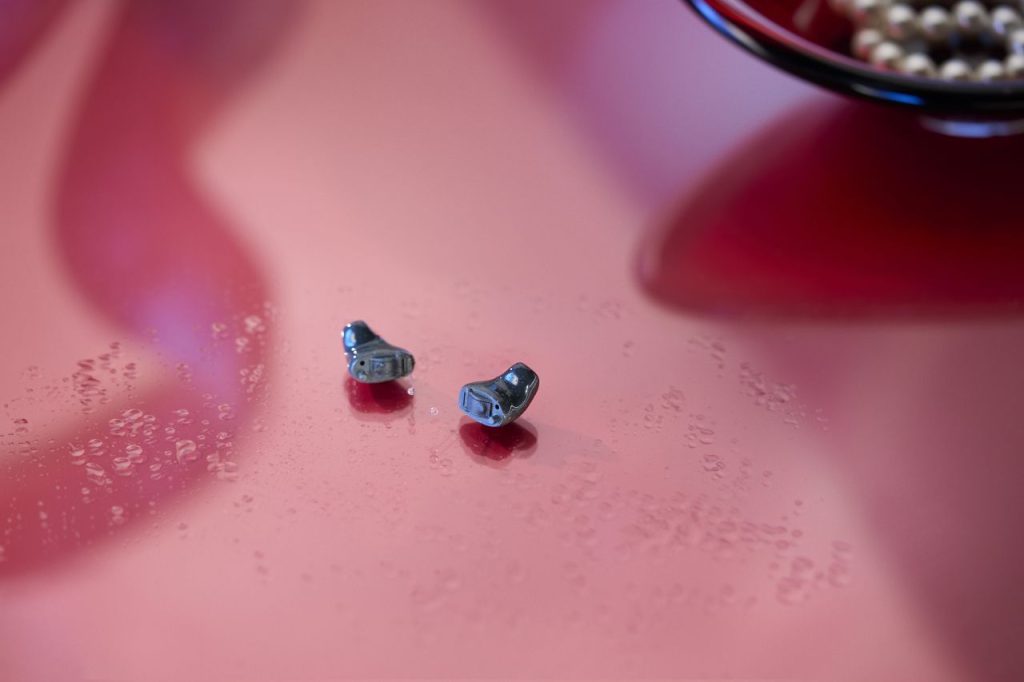
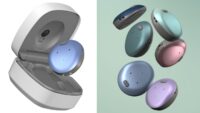
In February, GN revealed its latest styles for the Savi range: a custom In-The-Canal (ITC) aid and a Completely-In-Canal (CIC) aid.
Both aids help people who want a discreet hearing solution, as Laurel explains: “For the most part, people who go with in-the-ear hearing aids are looking for something that is smaller, and more invisible,” Laurel notes. The challenge for her engineering team was to deliver this without sacrificing the features that modern users now consider vital.
“What we wanted to do with the Savi line is to go ahead and make the smallest in-the-canal hearing aid we could possibly make and still have the connectivity,” she says.
Miniaturisation remains a complex balancing act, particularly as the industry enters the era of deep neural networks (DNN). Laurel says that while users want the smallest possible device, features that separate speech from noise require substantial processing power.
“There is no doubt now that we are in a place where you can literally separate speech from noise and turn the noise down. But if you want to do it at an increasingly powerful rate, you are going to have to make a bigger hearing aid that people don’t want,” she says of the trade-off that GN’s engineering team needs to undertake.
“You have to balance it all out. What are the things that are most important? For a user, hearing aid’s cosmetics and comfort are all at the top. Then there’s connectivity, sound quality, hearing and noise. We have to provide all of these things without compromising too much on any one of them.
“I think over time we will have smaller, more powerful rechargeable batteries.”
This power matters as the denoising programmes “eat the battery”, Laurel explains. “If you ran it all day, you wouldn’t have as good a battery life. It’s meant to be there for you in a really, really loud, very annoying environment. Turn on that programme, you’ll get the noise down, but run it too long and it will compromise the battery life.”
With CIC aids, at the moment, it is not possible to offer Auracast: “It’s really, really small and is not wireless so it can’t have Auracast in it,” Laurel says.
The development process often involves interdepartmental negotiation. Laurel works in engineering, and her team frequently reviews requirements from product management: “There are times that we have to go back to product management and say, ‘Well, you cannot have this and this because our chip cannot handle it, so which one would you want?'”.
This collaborative approach ensures the final product meets market needs, such as the demand for small, essential line custom products, without overstretching the hardware’s capabilities: “The people running GN’s product management are outstanding. They come in and develop what they believe the market wants at that price point and those features. They are usually spot on.
“They keep in touch with markets so they know what’s going on out there. They know what the people who fit hearing aids are requesting from us as a company, and the Savi was something people are requesting: they wanted small, they wanted the Essential line, they wanted custom products, and that is what we made for them. And then, of course, we added Bluetooth LE Audio and Auracast to make them even better.”
For Laurel, seeing the final product was a moment of professional pride: “When I got the Savi in my hands, I was just amazed at how small it was, especially as I had one made for my ears, which are pretty small. The Savi are very cosmetic and very, very small.”
The ultimate goal remains the creation of a near-invisible hearing aid that offers everything: the ability to help in noisy environments, full connectivity, and rechargeability.
Laurel says: “What people want is an invisible hearing aid that has absolutely everything that you can possibly put in there. You would want an invisible hearing aid that has the best hearing in noise, the best connectivity, and rechargeability.”
The Savi range is another leap forward for hearing health technology, and follows on from the launch of the flagship Vivia range.
“There is a lot to be proud of working at GN right now. It’s a great time to be an employee in the GN hearing section, no doubt about it.”
The ReSound Savi range is currently available in the US, Austria and Germany, with more countries following in the coming months. Those looking to experience this technology can book a consultation with their audiologist. For more details, log on to the GN website: https://www.gnhearing.com/en/products/hearing-aids/savi

Aurahear in your inbox!









Leave a comment