

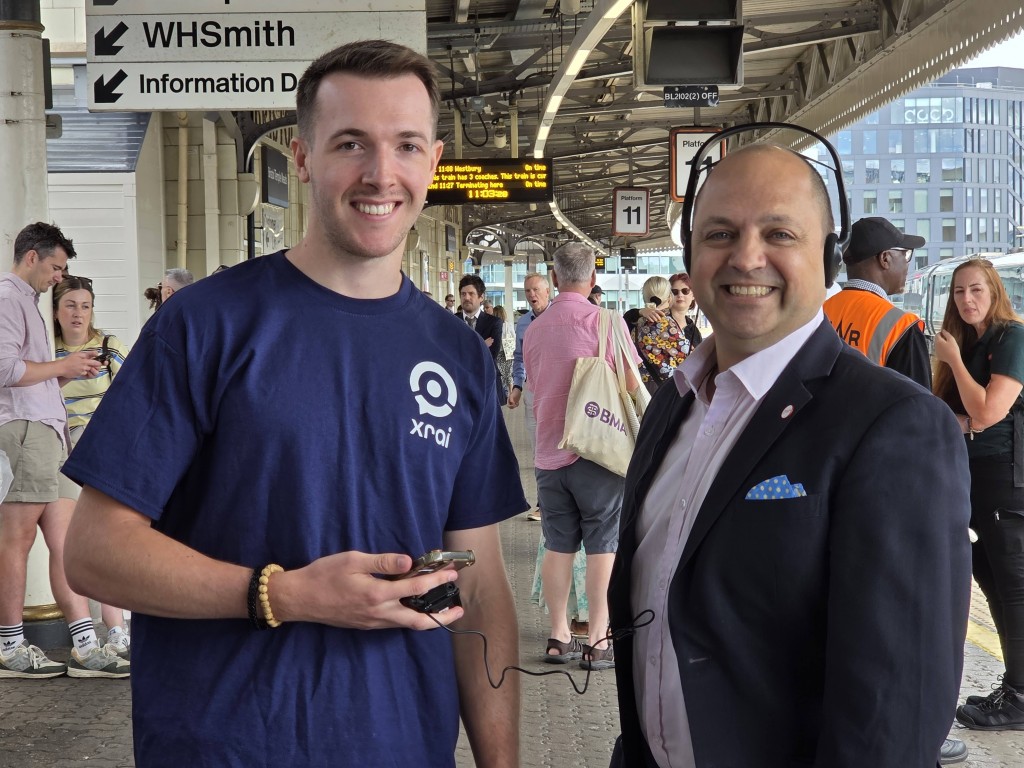
The launch of Auracast auto-translated platform announcements at Bristol Temple Meads railway station has been hailed as a success.
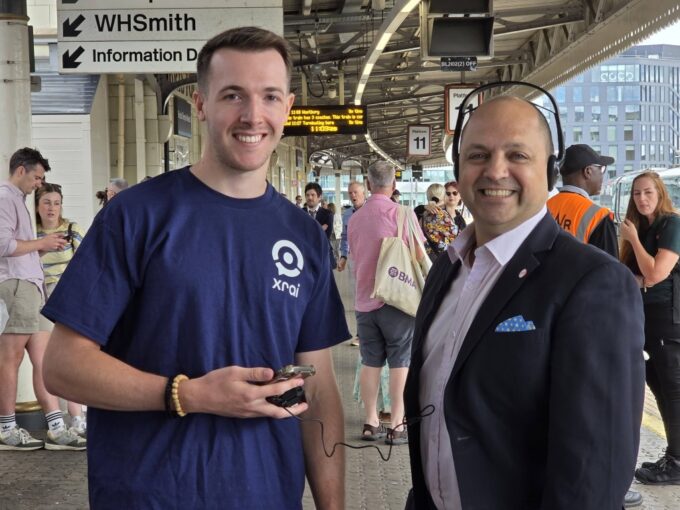
On Thursday, 6 August, members of XRAI teamed up with Ampetronic to showcase the technology, currently in use on Platform 9 of the Grade I listed station. They were buoyed by an appearance on BBC Radio 4’s Today programme earlier in the morning.
The project is delivered through the Station Innovation Zone programme, led by Connected Places Catapult in partnership with Network Rail. It fuses Auracast with existing public address system announcements. A local computer provides the processing power for the AI algorithms to translate English into different languages, making it easier for the 10.8 million passengers who use the station every year. They include commuters, tourists, students and business travellers from across the globe.

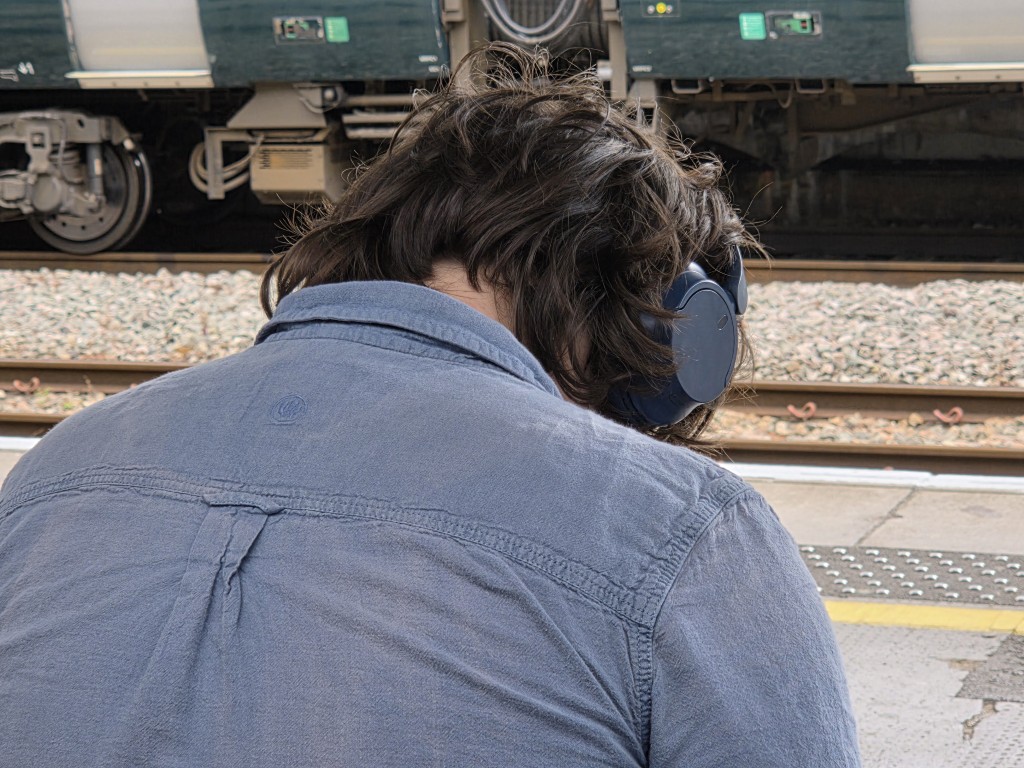
As noted by the XRAI and Ampetronic team, for many international passengers, understanding a last-minute platform change or service disruption can be challenging. By delivering announcements in multiple languages, the pilot aims to make journeys simpler, more accessible, and less stressful. It will also explore the technology’s potential and gather feedback on passenger experience.
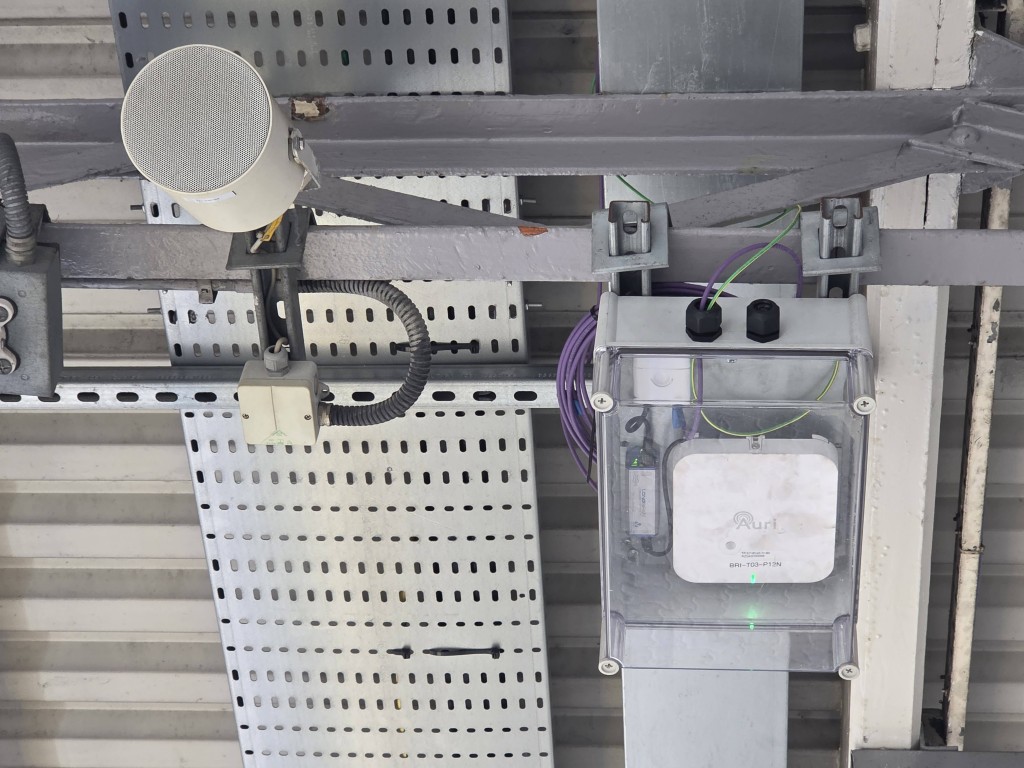
The setup is based around Ampetronic’s Auri transmitter, and people can listen to it via Auracast-enabled Cochlear, earbuds, headphones and hearing aids. For the demonstration event, visitors were able to borrow Ampetronic’s Auri receivers with headphones.
Ahead of the trial, Andy Rhodes, Testbed Manager, Station Innovation Zone at Bristol Temple Meads, and Brian Wortman, Senior Programme Manager at Network Rail, said that across the network millions of passengers rely on clear, timely information every day, and they have been looking for ways to make this more accessible for everyone.
“This pilot shows how emerging technologies like AI and Auracast could help remove language barriers and improve the travel experience, while giving us valuable insight into how these innovations could be applied across the wider rail network in the future,” they said.
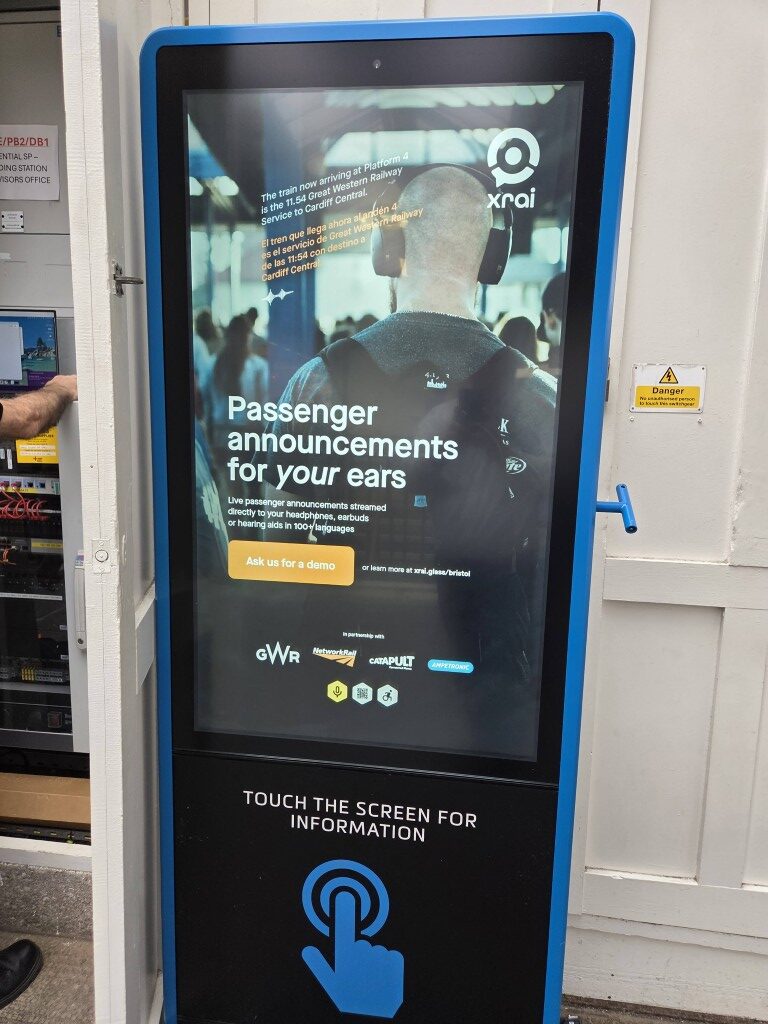
The project is part of The Station Innovation Zone, set up in Bristol Temple Meads to help
innovative SMEs prove that their technology works in complex, real-world environments, by using the railway as the place to try out their ideas.
Alan Peters, Rail Director, Connected Places Catapult, said: “It’s exciting to see this project build on last year’s successful Auracast trial, bringing together multiple innovators to demonstrate how AI and next-generation audio technology is helping industry partners evaluate innovation in real operational environments.”
Ampetronic ran a trial of Auracast at the station last year, showing how the technology can make a difference to English-speaking passengers. Its Auri technology was used for this, and has also been used in the permanent installation at Brighton Station, as we featured last month.
The company’s Business Development Manager, Jonathon Hoskin, said: “This latest collaboration builds on that success by adding a new layer of intelligence through XRAI’s AI translation technology.
“Together, we’re showing that the future of public announcements isn’t just about broadcasting sound – it’s about delivering information in a way that’s personal, accessible and meaningful to every passenger.
“We’re excited to see how this technology could shape the next generation of passenger experiences across transport networks worldwide.”
XRAI has already been working in the accessibility sphere thanks to its flagship product, the XRAI Glass. This is a pair of glasses with inbuilt screens that can turn speech into real-time generated subtitles. These are projected onto the lens so that the wearer can see the captions, but no one else can.
The Auracast trial at Bristol Temple Meads is an extension of its work.
Jack Bloomfield is the company’s Head of Marketing. He said he had enjoyed the opportunity to showcase its announcements.
“We are so pleased to have been able to demonstrate today,” he said. “There is only so much we can do when we sit behind a computer, developing the technology. It’s not until we can get into a real operational environment such as Bristol Temple Meads that we can actually start to gather genuine feedback about how the technology is working and how we can make it better.
“We have had great feedback, and we are really happy with how the event has gone. We are now looking forward to taking the suggestions that the community have given us and working on them to make a better product.”

Aurahear in your inbox!












Leave a comment