

For the hearing aid community, Auracast represents the most significant technological leap since the invention of the digital processor, and we are very excited about it.
Until now, the best assistive listening technology out there was the Induction Loop, also known as the Telecoil. It was invented in 1936, long before modern hearing aids existed.
Ever since, it was the gold standard for public accessibility, but not without its flaws. While reliable, loops are prone to electromagnetic interference (buzzing) and require expensive, permanent floor-to-ceiling copper wiring, Auracast replaces this with a digital signal that offers much clearer sound, stereo support, and a much simpler installation process for venues.

To install a Telecoil, venues need to place metal wire in a loop around the venue. This needs to be tucked into walls or under carpets, requiring extensive work just to set up. And if it goes wrong, which it frequently does, it requires specialist equipment to find and diagnose the faults.
Auracast, on the other hand, can be installed in a venue in as little as 45 minutes, and engineers can check if it’s working simply by donning a pair of Auracast-enabled headphones. So much quicker, so much easier, and so much less hassle. It can be less expensive too as in most cases it’s installing an Auracaster, wiring it into the AV desk, and setting it up via software.
Auracast in hearing aids
It’s one thing for venues to have Auracast in, or to buy a television with Auracast, but without a way of listening to an Auracast, the tech is limited.
Thankfully, hearing aid manufacturers have been involved with Auracast from its very early stages. GN Group’s Thomas Olsgaard explains more about the development process here. This means they are releasing Auracast-enabled equipment and hearing aids now.
As of early 2026, the “Big Six” hearing aid manufacturers have taken different paths toward this transition. We detail which hearing aids have Auracast in our guide here.
GN ReSound was an early leader with the Nexia and Vivia platforms, which were among the first to be fully Auracast-enabled. The company is committed to installing Auracast in every hearing aid it releases, where possible.
Starkey’s Edge AI and Omega AI have also embraced the standard, focusing on how the low-power nature of Auracast can extend the battery life of rechargeable aids, a major benefit for users who want to stream audio all day.
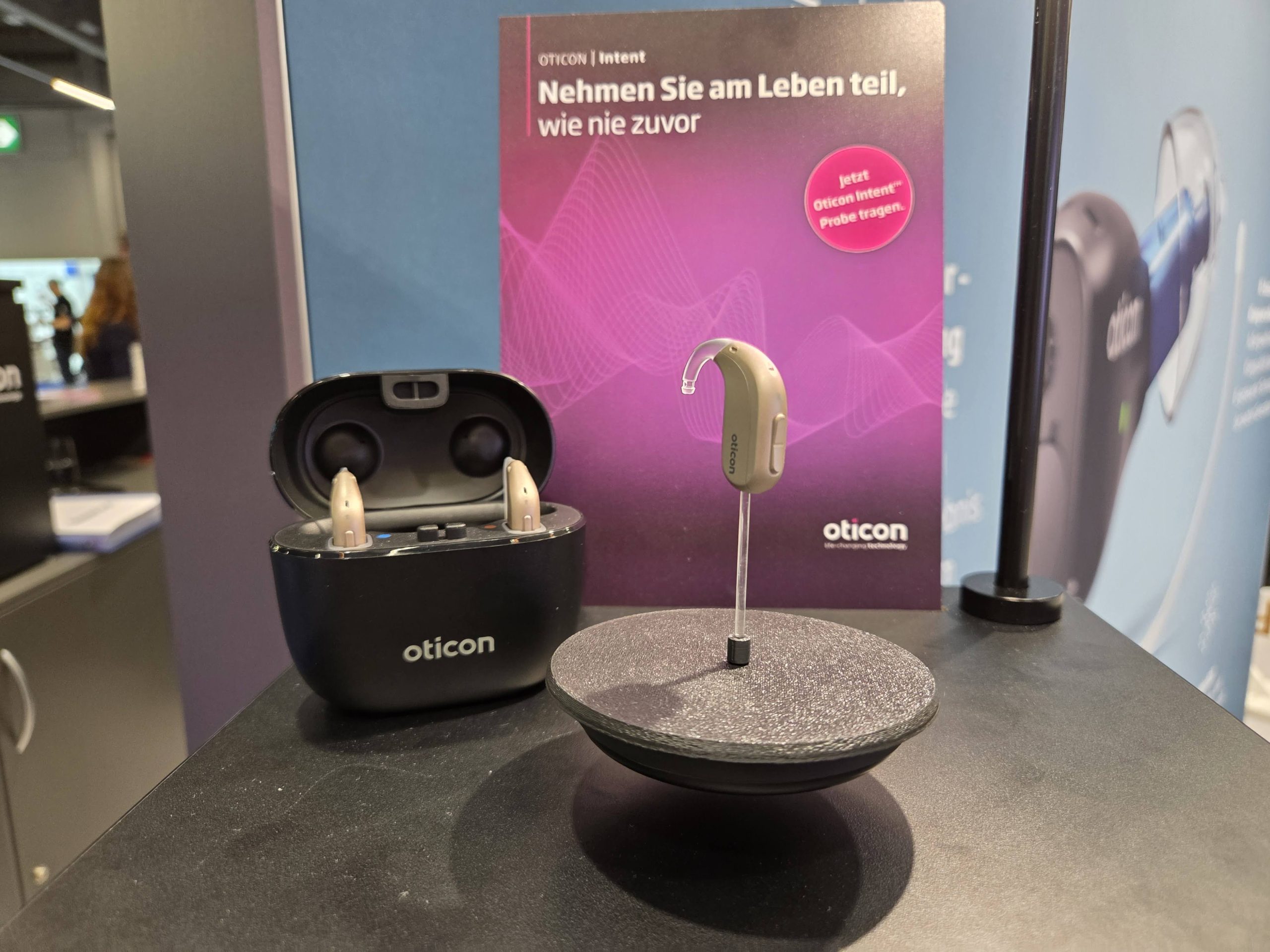
Oticon followed with the Intent and Zeal ranges in the autumn of 2025, utilising a dedicated chipset designed specifically for the LE Audio standard. They have just launched the Oticon Play and Verit, expanding their range.
Phonak has made its hearing aids Auracast Ready. This means it can stream Auracast, but the feature needs to be enabled via a firmware update. At the moment it is choosing not to do this, a decision we disagree with. We outline why in this article.
Auracast advantages
One of the unique features of Auracast for hearing aid wearers is the “Multi-Stream” capability. Traditionally, a hearing aid could only “listen” to one thing at a time: for example, using a TV streamer.
With Auracast, an aid can receive the “clean” broadcast signal while the external microphones remain active at a lower volume.
This allows the wearer to hear the Auracast while still being aware of their surroundings or chatting with the person sitting next to them. This “transparency” is a massive safety and social benefit that old-fashioned FM or Loop systems couldn’t easily replicate.
However, the transition doesn’t mean the end of the Telecoil.
Many “Auracast-Enabled” hearing aids in 2026 have the ability to use Telecoils: Oticon has this built into some of its hearing aids, while ReSound’s MultiMic+ will pick up a Loop if it’s operational. This ensures that users aren’t left behind as the world upgrades.
What should you ask your audiologist?
We advocate that anyone buying a new hearing aid should opt for one with Auracast in – as long as the hearing aid offers the best fit for your hearing loss. After all, if the hearing aid doesn’t help with that, it’s not doing its job.
Make sure you discuss your options thoroughly with your audiologist.
When choosing a new device, it is vital to ensure it supports the LC3 codec and ASHA (for phone streaming) alongside the newer LE Audio profile.
Why do we recommend an Auracast Enabled hearing aid? It is expected that hearing aids will have a working life of around five years, possibly longer. With the Bluetooth LE Audio standard becoming part of our everyday life and more and more venues installing it, a hearing aid with Auracast makes sense: you are future-proofing yourself.

Aurahear in your inbox!










Leave a comment