

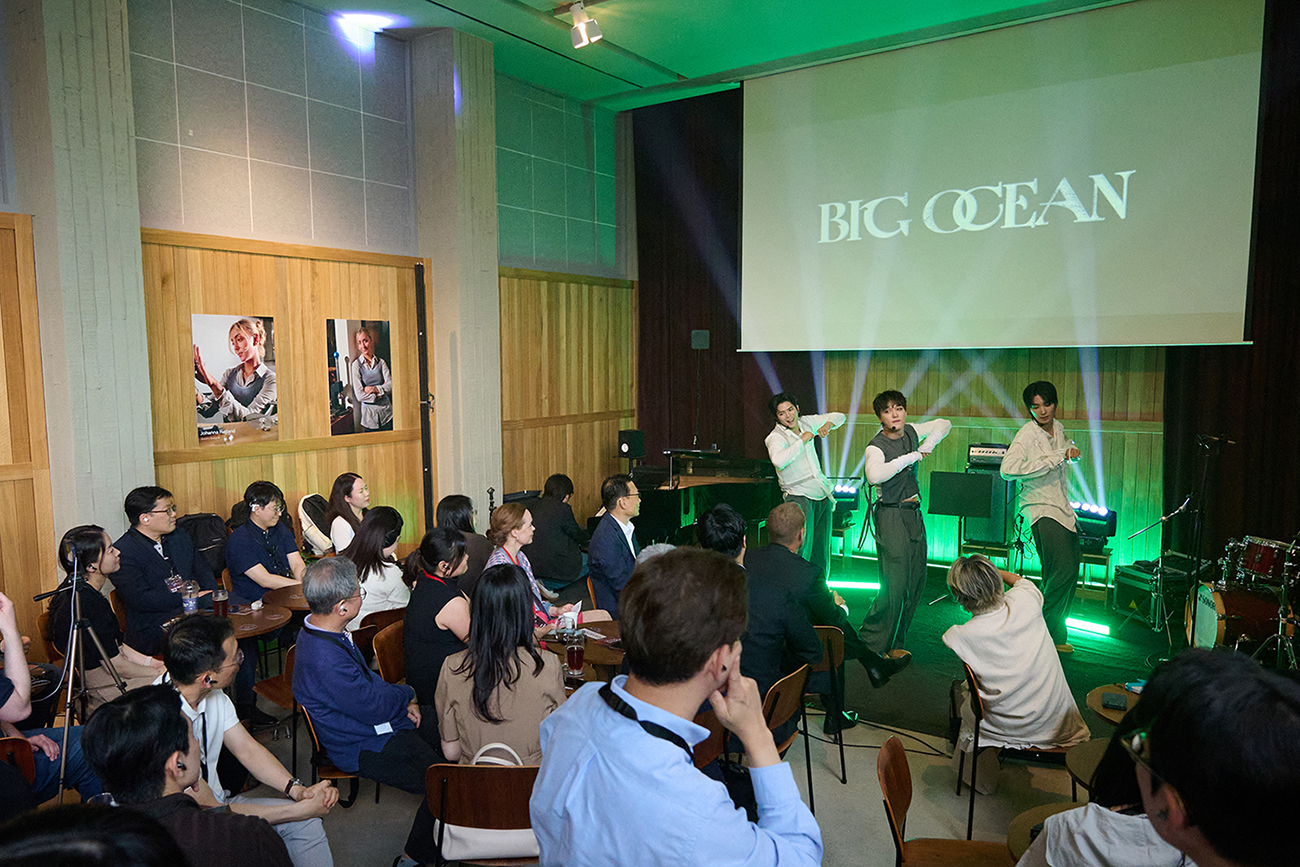
Big Country, a K-Pop sensation, wowed a select audience at a Seoul bar earlier this week as part of an event showcasing the first Auracast audio installation in South Korea, bringing high-quality, shared sound throughout the venue.
The trio all have hearing loss, and took to the stage of Kind Seoul in Seongsu to give an intimate performance and answer questions about their work and experiences. Their performances integrate Korean, American, and International Sign Language and use cutting-edge technology to feel the music’s beat.
Band members are Kim Ji-seok, a former professional ski racer; Park Hyun-jin (PJ), a former YouTuber who raised awareness for hearing disabilities; and Lee Chan-yeon, a former audiologist.

Haley Cha, CEO of Parastar Entertainment, which created and manages Big Ocean, was pleased to highlight the band’s work to the assembled international audience.
“Music has always been a way for us to connect, even when others assumed it might not be possible,” they said. “As artists with hearing loss, the members of Big Ocean know what it feels like to be left out of shared experiences, and how powerful it is when those barriers are removed.”
Organised by GN in collaboration with Ampetronic, which makes the Auri Auracast system, the event also included a jazz band and a panel discussion exploring accessibility and representation in music and entertainment.
The showcase followed the release of research by GN showing that more than a third of people with hearing loss across the US, Australia and the UK feel they are perceived as rude or disengaged, driving social exclusion.
Additionally, four in 10 respondents (40%) say they are seen as less intelligent or less capable. Additionally, more than a third say others believe they should be able to “try harder” to hear.
Andreas Anderhov, GN APAC President, said: “These misconceptions don’t just affect perception; they influence how environments are designed, often overlooking the complexity of hearing in dynamic, noisy settings. That’s why our focus at the World Congress of Audiology is to create an experience that everyone can participate in fully and equally.”
The Auracast demonstration showed how the technology can transform this.
“Live performances can be challenging for people with hearing loss, often limiting how they experience the moment. Auracast helps address this by delivering “front-row” sound directly to personal devices, so audiences can enjoy events together,” explained Ampetronic’s Sam Burkinshaw.
“Through our partnership with GN, we aim to accelerate adoption globally and inspire venues to rethink how they deliver accessible audio.”
The panel between the musical performances included British comedian and hearing aid user Angela Barnes. It was her first experience in using Auracast in a public setting, tuning in via her ReSound Vivias.
“As a teenager, I was hanging out in clubs and bars. Socialising is such a core part of your development when you’re a teenager. For me, it was really difficult because the hearing loss meant that I was socially very awkward,” she told the audience, sharing some of her experience in filming TV shows such as Mock The Week, where she would ask for an audio feed to be sent to her ear to ensure she could compete with the sharp wits on show.
“When you’re on stage, the connection with the audience is something you feel as much as you hear. Having hearing loss has shaped how I experience those moments; it makes you very aware of connection in all its forms.
“That’s why this idea of technology bringing more people into the same live moment is so meaningful. It opens up what shared experience can be.”
Regular readers will know that Auracast is a Bluetooth LE Audio technology that allows audio to be streamed directly to compatible headsets, including headphones, hearing aids, Cochlear and earbuds. Unlike previous Bluetooth technologies, an unlimited number of people can connect to a broadcast simultaneously, and unlike other assistive listening technologies, such as Telecoils, people can sit where they want within a venue.
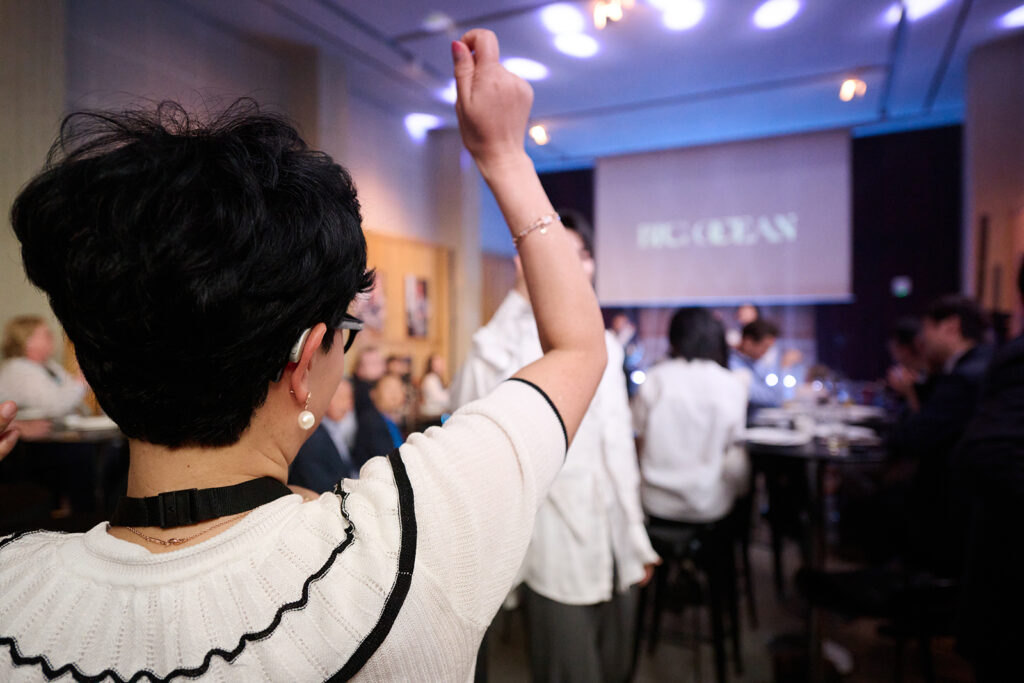
For this event, Ampetronic set up its Auri transmitter, which was plugged into the venue’s AV desk. Those without their own Auracast-enabled equipment were able to borrow a receiver unit and plug in headphones or, if their hearing aid had a Telecoil, a portable neckloop.
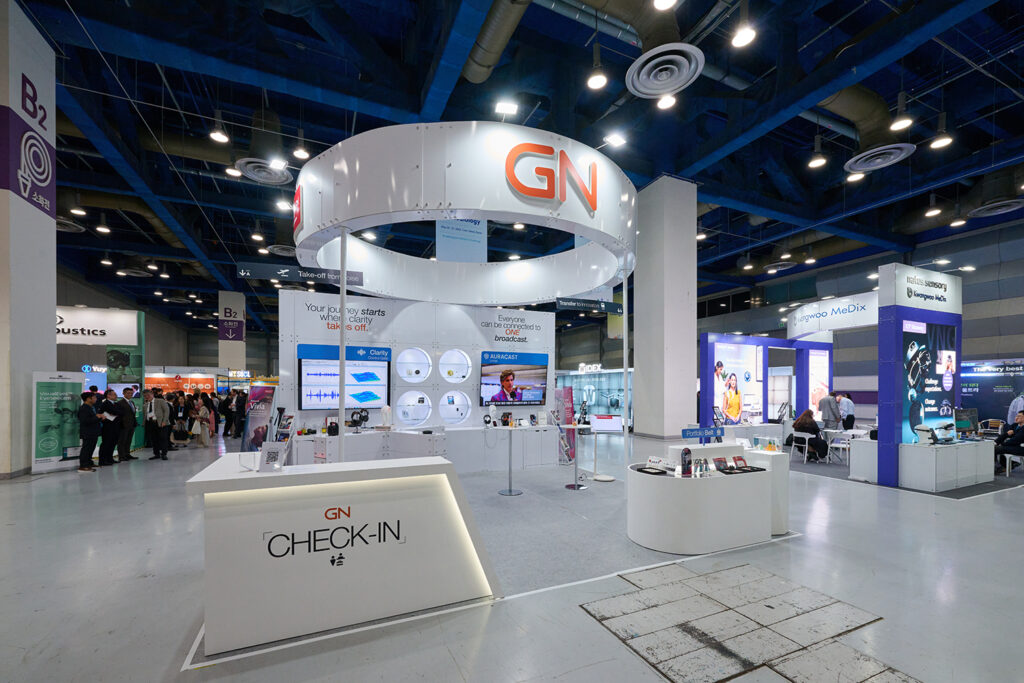
The event was organised during the 37th World Congress of Audiology, held in the Coex in Gangnam district. GN had its own booth in the exhibition area, where it showcased its latest products, including demonstrations of its deep neural network (DNN) technology and how it delivers superior hearing-in-noise performance, as well as showcasing its Auracast items, including the Multi-Mic+ and its TV Streamer+.

Aurahear in your inbox!










Leave a comment