

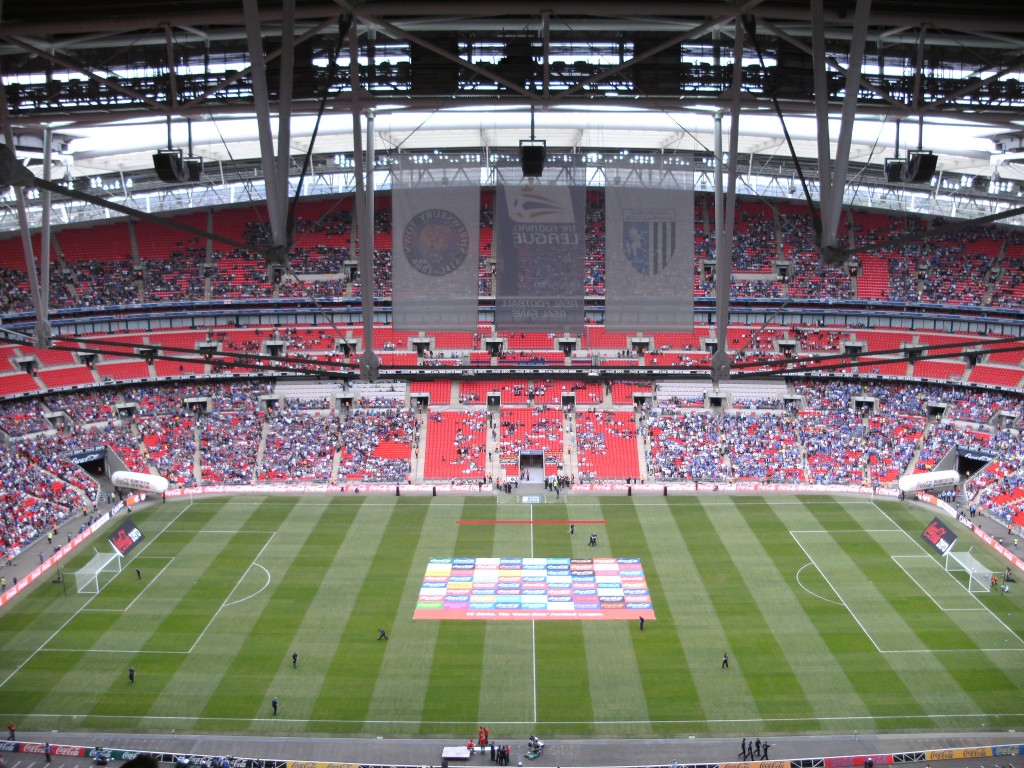
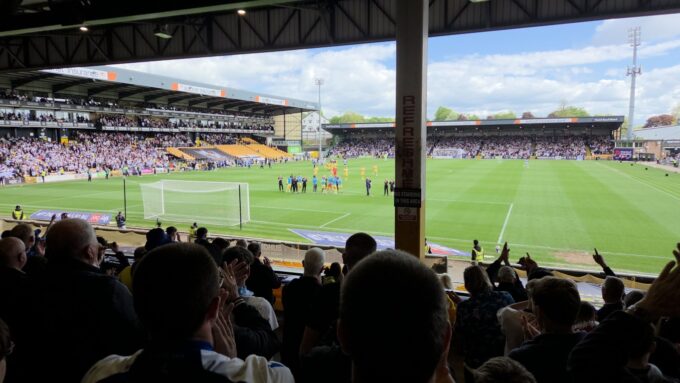
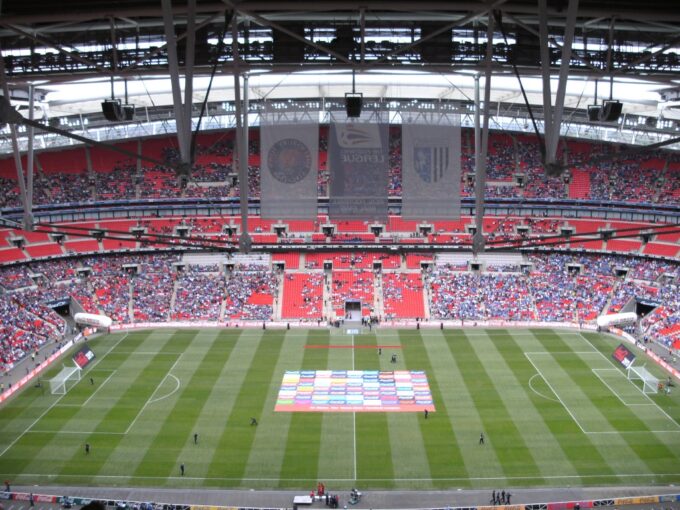
There are 92 clubs in the top four divisions in English football, but only a handful have installed pitchside assistive listening systems. This is despite governing bodies such as FIFA and UEFA calling on clubs to use them.
This means that for many fans, the announcements made on public address systems are lost in the general hubbub, razzamatazz and excitement of the crowd. If railway stations are noisy places, they have nothing on football stadiums.
It’s not just deaf and hard-of-hearing fans who want to hear what is going on. These announcements include team news, details of substitutions, goal scorers and attendance figures. Being able to hear these clearly enhances the matchday experience of all fans.

We explored the advice given by governing bodies in this article. As it is a long piece, we have separated out the work some clubs are doing to be inclusive to as many fans as possible. As with the other article, our focus is on assistive listening solutions.
Loop the loop where possible
At this moment in time, few people have Auracast-enabled hearing aids or Cochlear as the technology is still in its infancy. While not everyone has a Telecoil either, it is currently the most-used assistive listening technology. It relies on people sitting within a loop made of wire, which can be difficult and costly to install.
Auracast, running wirelessly on Bluetooth LE Audio, will be easier for stadiums to put in place, and it will be possible to offer multiple streams, including home and away commentaries and audio descriptions. It is also compatible with Telecoil-enabled hearing aids if a receiver unit with a portable neckloop is used as a bridge.
Infrared systems aren’t suitable for stadiums as sunlight can interfere with the signal, while WiFi can be an issue if too many people are trying to log on at the same time. If a signal is hard to latch on to, the listening experience will be choppy.
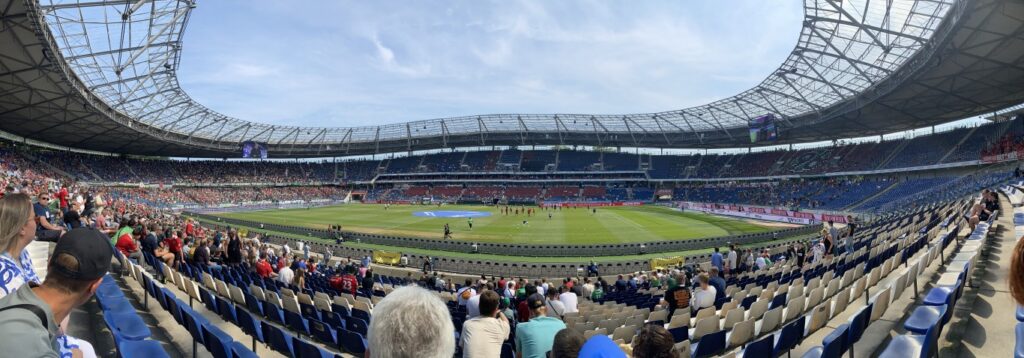
Spurs is equipped with loops
Tottenham Hotspur is one club that has installed a pitchside loop that “allows supporters of varying hearing impairments access to audio descriptive commentary” if they have a Telecoil in their hearing aid. The club has headsets available from accessible entrances to the stadium, and has also installed loops to every catering kiosk, and selected kiosks in the Tottenham Experience, its museum.
To help supporters on matchdays, Disability Access Stewards wear purple tabards to make them easy to identify.
Seagulls flying high
A similar setup is in place at The Amex Stadium, home to Brighton and Hove Albion. The club notes on its website: “Our stadium is fully covered by a radio-based assistive hearing system enabling you to listen to safety and entertainment announcements, designed for fans who have Telecoil hearing aids, with the ‘T’ setting. To use this service, please visit us at the ticket office window 1 on a matchday to collect a neck loop and receiver.”
It also runs a Hidden Disability Wristband scheme so that catering, stewarding, and ticketing staff can assist supporters. Fans can register and confidentially share their additional needs so that the club can help them where possible.
Cherries picking up what they can
Further down the south coast, fellow Premier League team Bournemouth doesn’t have a loop in the stadium. Instead, like many clubs, it has the facility at kiosks and the ticket office. It says: “On matchdays, information including team line-ups, substitutions and goal scorers will be shown on the electronic scoreboards as well as the public address system”.
Despite this, AgeUK reckons the club is the most accessible stadium in the League (2023 data), thanks in part to having more wheelchair spaces than any other club in the Premiership … and the second-smallest stadium.
Man City does it by video
Manchester City’s accessibility page is headed up by an explainer video, detailing how its accessibility team works, promising that they are available seven days a week, with matchday support available for both home and away fans.
An induction loop is installed at ticket windows, while a matchday audio descriptive commentary can be accessed by a smartphone app. Alternatively, receivers can be booked at least three days in advance from the Man City access team.
Newcastle United takes the shirt
While Newcastle United doesn’t have the stadium set up with a hearing loop, it does at least have the facility at services counters and the ticket office.
Two years ago, the club wore the RNID logo for a special fixture aimed at making football and live sport more accessible for deaf people. Club sponsor Sela made a range of haptic shirts available for deaf fans. These transform the noise of the stadium into real-time touch sensation. Fans and match-day mascots, who are deaf or have hearing loss, wore the shirts in the stands.
And this wasn’t a one-off experience: the club continues to make the haptic experience available to those who want to feel every moment of the game.
The match, which was a clash with Spurs, took place in April 2024, and came as RNID published research showing that 71% of people surveyed who are deaf and have hearing loss believe new technology can be used to improve the matchday experience and make live sporting events more accessible. And 93% of deaf people agree you can’t beat the thrill of watching a live sports event in a stadium.
At the time of the event, Ibrahim Mohtaseb, Senior Vice President of Sela, said: “St. James’ Park is renowned for its noise and passion. Through this initiative we hope to enable deaf fans and fans with hearing loss to feel a part of this.
“We would welcome the whole football family to join us by adopting the technology. By acting now, we can collectively make watching live football matches an incredible experience for everyone who loves the game.”
This view was echoed by Peter Silverstone, Chief Commercial Officer at Newcastle United, who said: “When Sela shared the idea and technology behind the haptic shirts, we supported the concept immediately, knowing it would make such an impact to our supporters who are deaf or have hearing loss.
“We believe that (this) will be truly game-changing for football and expect this campaign will revolutionise the football experience for any fan who is deaf or has hearing loss, regardless of which team they support.”
Similar technology was used at the Eurovision Song Contest earlier this year, along with Auracast.
Can Auracast make a difference in stadiums?
As we have shown, precious few stadiums are actively offering assistive listening solutions to fans attending games. Unless they borrow headsets for visually impaired supporters, there is no way to get additional commentary while watching the action on the pitch.
While BBC local radio provides coverage of many matches, the licence for games prevents them from being shared on the BBC Sounds app. If home fans took a radio to the games, they would find the commentary has quite a lag.
Telecoils are a costly installation compared to Auracast, and with many clubs operating on tight budgets, it can be hard for the balance sheet to justify this.
Outdoors, Auracast can excel as the Bluetooth LE Audio signal can travel up to 100 meters in a circular fashion. With football pitches being around 100 to 110 metres in length, it is theoretically possible to install an Auracast system that covers the whole stadium from an installation in the centre line. In reality, more than one will probably be needed to ensure all four corners of a stadium are covered.
As with current assistive listening solutions, fans can continue to borrow receiver units to hear either from headphones or a personal neckloop, ensuring continuity with existing solutions such as Telecoil-enabled hearing aids. And, of course, fans can bring their own devices if they wish.
The RNID is keen to encourage clubs to play their part in making their stadiums as accessible as possible for deaf and hard-of-hearing fans.
Its technology lead, Alastair Moore, said: “Football is the nation’s favourite sport with Premier League games drawing average crowds of 40,000 people. The collective joy of a win, the shared misery of defeat, are all part of belonging to your team. But not being able to hear the action can leave people who are deaf or have hearing loss feeling excluded.
“Technology can play a massive role in giving people equal access. This could be haptic shirts conveying the emotion and energy of the crowd through vibrations, or an assistive listening system relaying stadium announcements and match commentary to people’s hearing devices.
“We’re particularly excited about the potential of Auracast in this space. Auracast systems are now widely available and have been able to deliver transformative audio experiences in a range of venues; however, its use in football grounds and stadiums is limited.
“We would encourage clubs to embrace Auracast and help create a more inclusive matchday experience for fans who are deaf or have hearing loss.”
We wholeheartedly agree, and hope that all EFL clubs get behind Auracast sooner rather than later.

Aurahear in your inbox!






Leave a comment