

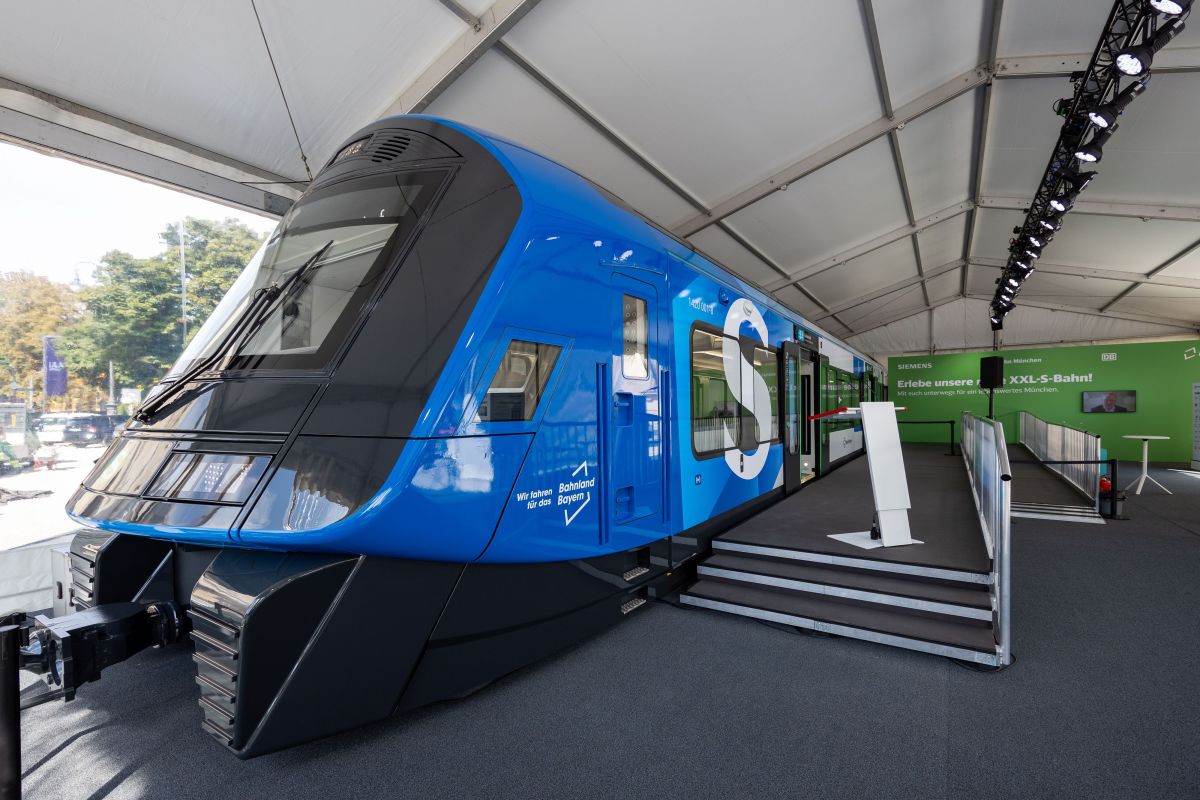
The train of the future is currently under construction … and it includes Auracast.
Siemens Mobility and Deutsche Bahn have entered into a collaboration that will deliver new S-Bahn trains that increase capacity and set new standards for comfort, sustainability and technology.
The project will see 90 new trains enter into service by the end of 2028. Each train will feature 13 carriages and have a total length of 202m – the longest ever offered in Germany. This means they can carry 1,841 passengers.

The aim is to make the train so attractive, people will switch from driving to public transport.
The seat arrangements will offer more legroom than existing trains, and there will be group areas and folding seats. On hot days, passengers will welcome a powerful air conditioning system.
When the project was announced in August 2023, Evelyn Palla, Board Member for Regional Transport, Deutsche Bahn AG,. said: “Germany’s most modern S-Bahn trains will be an important component in our efforts to drive the mobility transition in the Munich region. Each of the new XXL trains will replace 1,500 cars during rush hours. This is truly local transport of the future.”
Making journeys easier for passengers
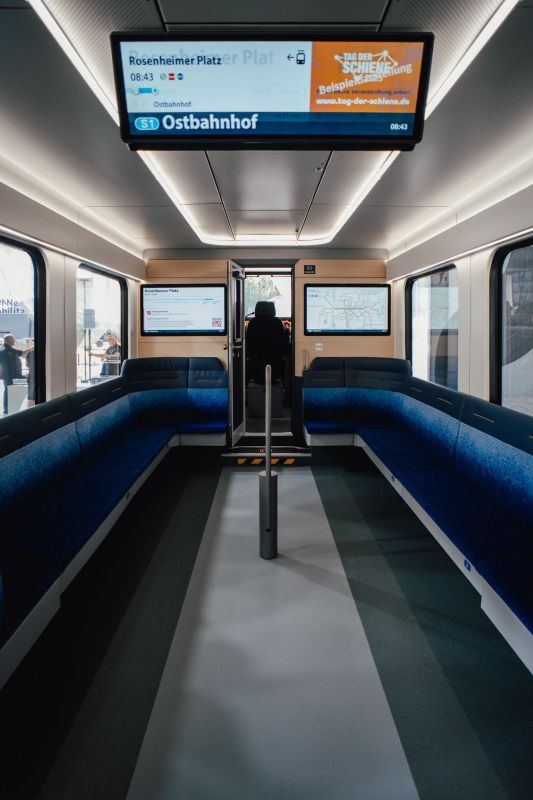
Among the enhancements will be a new passenger information system.
This starts outside the train: routes are colour coded and LED strips mounted on the trains will show this so passengers can instantly tell if they are catching the right train.
Displays located above doors inside and outside will provide details about the stations and how packed the carriage is: these real-time displays use a technology called DB Lightgate and are currently being rolled out across stations on the S-Bahn network.
It uses sensors on the tracks to measure in real time how busy the cars are and shows this before entering the platform displays: green stands for cars with plenty of space, yellow for medium capacity and red for little space in the car.
Announcing the scheme in October, Bavaria’s Transport Minister Christian Bernreiter said: “Lightgate is another piece of the mosaic in how we want to make S-Bahn travel in the Munich area even more comfortable, punctual and attractive in the future and speed up passenger changes.”
Greater accessibility including Auracast in the new S-Bahn trains
Inside the trains there will be 168 displays, showcasing the network map and journey progress to the position of elevators and exits at the next platform.
There will be Tactile pictograms, Braille, acoustic signals, and high-contrast design, and Auracast will be available for those who want it. That includes those with compatible headphones and hearing aids, earbuds and Cochlear.
This will bring about a Quiet Carriage benefit to every carriage: Auracast is a great addition for commuters in Munich as they will be able to receive clear announcements directly in their ears without the ‘echo’ from the usual station or carriage announcements.
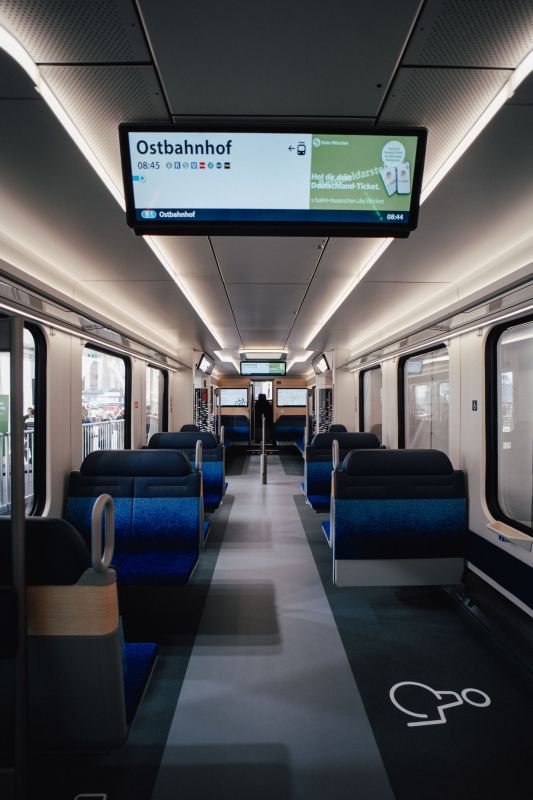
This is a massive plus for those with sensory processing issues or profound loss, as well as any commuter who wants to hear what is being said.
The Auracast functionality is integrated into the passenger information systems supplied by Wabtec.
Pascal Schweitzer, the company’s President of Transit, said: “The Munich S-Bahn is one of the busiest transit systems in Germany, and those commuters rely on easy access to information each day to simplify their journey. The state-of-the-art system will provide comprehensive, real-time information for an enhanced passenger experience.”
For the design, the Free State of Bavaria and DB, worked with design agency Neomind: surveying passengers, conducting tests, and speaking with politicians, passenger associations, and stakeholder groups. This included a mock-up of a carriage which was displayed at last September’s IAA Mobility Open Space Congress held at Munich’s Königsplatz. Visitors could go on guided tours and explore the planned interior.
This is now being stored near the future S-Bahn depot in Pasing-Langwied, so it can be used for further testing to ensure a perfectly designed vehicle can be put into service at the end of 2028.
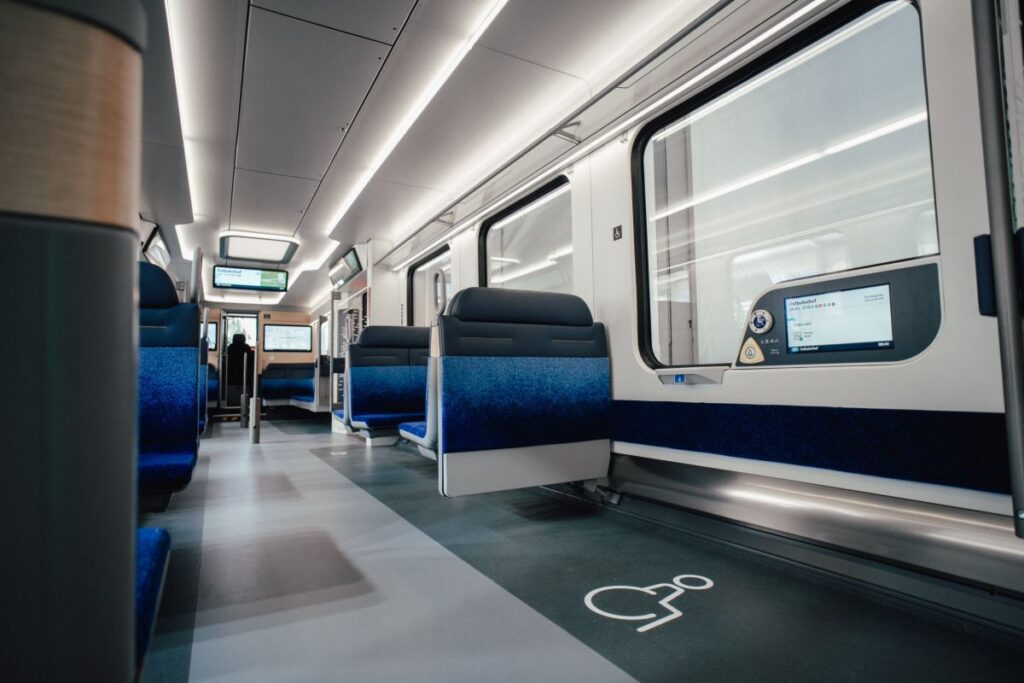
Christian Bernreiter, Bavaria’s Minister of Transport, said at the launch of the exhibition: “I am particularly pleased that passengers were involved in the development process and can now see how their ideas have been implemented into reality.”
And Evelyn Palla, Member of the Management Board for Regional Transport at Deutsche Bahn AG, said that the trains will be the future of public transport: “Together with the commissioning body and the manufacturer, we are setting the standard for a completely new travel experience.”

Aurahear in your inbox!















Leave a comment