

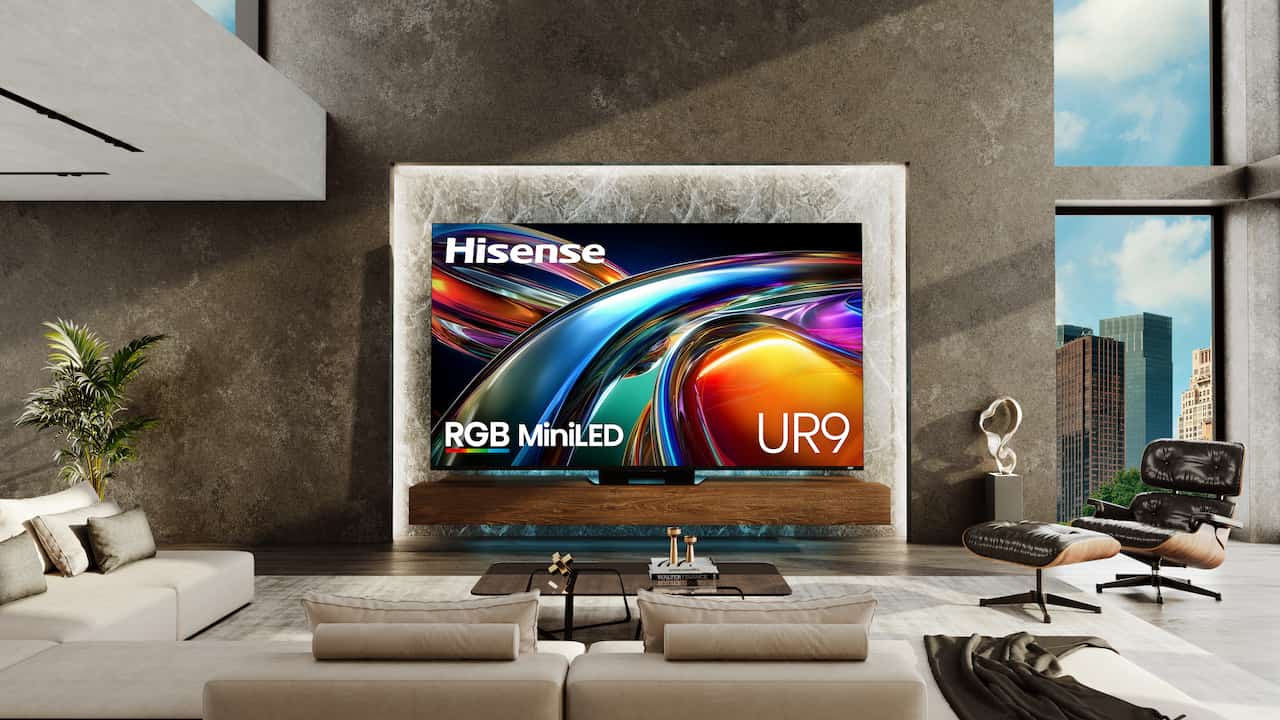
HiSense is the latest manufacturer to reveal it is working to integrate Auracast into its product ranges, following in the footsteps of Samsung, LG and Panasonic.
The Bluetooth SIG recently published a question-and-answer blog post with ZiJing Deng, the head of network communication technology and wireless technology expert from Hisense, which makes a range of products for the home, including televisions and speakers. It can be read here.
They said: “By integrating Auracast broadcast audio into the TV and surround sound speaker ecosystem, the TV functions as an audio broadcaster … this solution addresses four critical pain points of protocol fragmentation, setup complexity, latency, and stability.”

As we have seen from our recent review of the LG C5 TV, introducing a Bluetooth soundbar into the mix creates a pain point: you can have either a soundbar or Auracast, but not both. HiSense’s solution offers hope that this can be eliminated.
ZiJing said that Auracast allows people to use the technology to enhance spatial audio immersion, promising benefits for film lovers and serving as an assistive listening solution.
“Due to cross-brand scalability, users can expand their system with Auracast speakers from different manufacturers, significantly reducing ecosystem lock-in. More importantly, the solution has high plug-and-play simplicity with instant connectivity, eliminating complex setup procedures,” they noted.
With HiSense’s plans for Auracast, the company is looking to develop products based on Bluetooth HDT (High Data Throughput). This will increase the data rates Bluetooth LE can output, with an expected speed of 7.5 Mbps – perfect bandwidth for premium sound setups.
“Moving forward, we will actively adopt the Bluetooth SIG’s standardised HDT specifications to further enhance our Bluetooth surround sound and overall audio quality. We are currently working closely with our chipset vendors to make this happen,” ZiJing said.
The company is also exploring dual-audio track sharing Auracasts. This could allow people to choose what they listen to – for example, one person could watch the film with enhanced sound effects, a second could listen to an audio-described version. Or, for a group of international friends, one person could hear the film in its native language, and the other could listen to a version dubbed into another language.
“Additionally, Hisense TVs will stream audio directly to Auracast-enabled hearing aids and assistive devices, ensuring an inclusive, synchronised, and crystal-clear listening experience for those with hearing loss,” ZiJing promises.
There is no timescale attached to these developments, but we welcome HiSense’s commitment to Auracast. We encourage it – and all television and home cinema manufacturers – to ensure that Auracast is clearly labelled in the specifications, and training is offered to retail staff to understand how Auracast works and the benefits it can bring to the home.
At CES in January, it unveiled its RGB MiniLED ranges: the UR9 and UR8.
“Accelerated innovation is a hallmark of Hisense,” said Ondre Clarke, Head of TV Product Marketing at Hisense USA, when he announced the range.
“We’re bringing advanced technologies to market faster, scaling them sooner and making them accessible to more homes. This year’s expansion of RGB technology is another example of how we continue to lead the industry forward.
“It’s the kind of progress that reinforces why Hisense is one of the most dynamic pioneers in the TV market today.”

Aurahear in your inbox!









Did Hisense mention anything about upgrading existing models to Auracasr with firmware updates? It would be great to have this on Hisense U8Q TV