


Auracast has arrived at the National Theatre, and it could be the most significant installation in the UK so far.
Over the past year, we have featured different theatres that have brought Auracast to their patrons, including Contact Manchester, Everyman in Cheltenham, and the Hippodrome in Birmingham.

These venues have been early adopters of the Bluetooth LE Audio technology, which works with Auracast-enabled devices such as hearing aids, headphones and earbuds. Auracast delivers real-time low-latency, high-fidelity audio distribution to multiple compatible devices and removes traditional barriers to assistive listening: bring your own device is a big benefit of the technology.

At the moment, these installations are a trickle, but with the National Theatre coming on board, this could trigger a flood of Auracast installations. Here’s hoping.
What has the National Theatre installed, and where is it located?
First, the National Theatre is more than one theatre. It organises several touring productions, and its London home on the South Bank, next to the River Thames, has several performance spaces. It is within walking distance of Parliament, Waterloo, and Embankment stations and is one of the world’s most renowned theatres.
For its first foray into Auracast, it has chosen Dorfman Theatre. This 450-seat space supports theatre-in-the-round, creating a truly immersive experience.
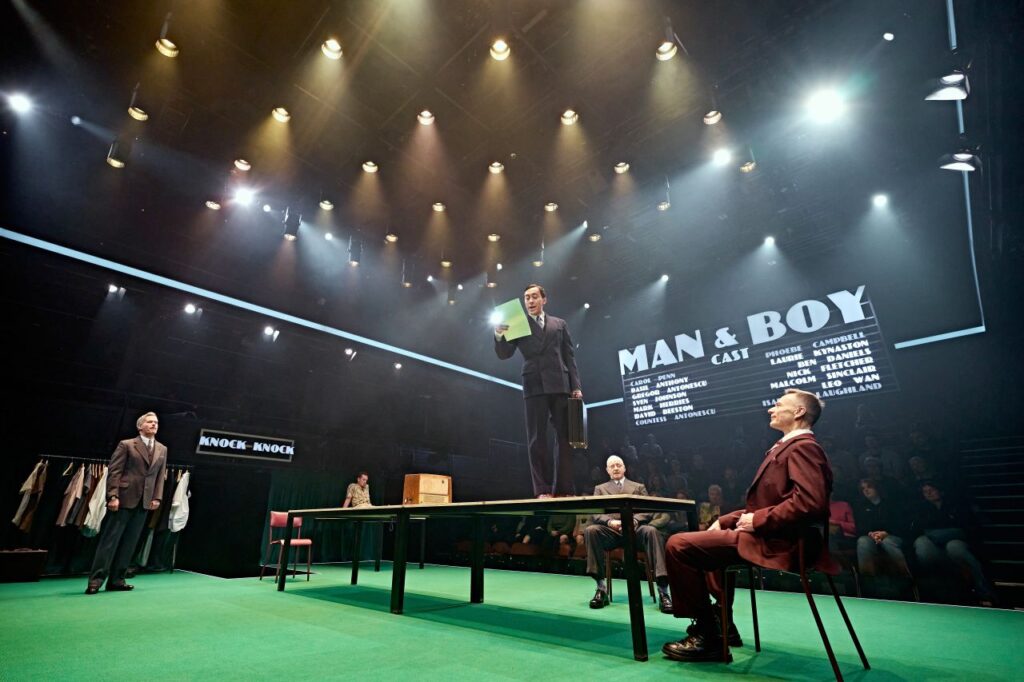
The performance space’s flexibility makes traditional Telecoil installations challenging. It would require assistive listening devices to be in a single section, which could create issues for some performances, limit options, and force directors to designate a single area of the space solely for Teleocoil-enabled patrons.
Auracast changes this: people can sit wherever they wish, a significant step forward for accessibility and equality.
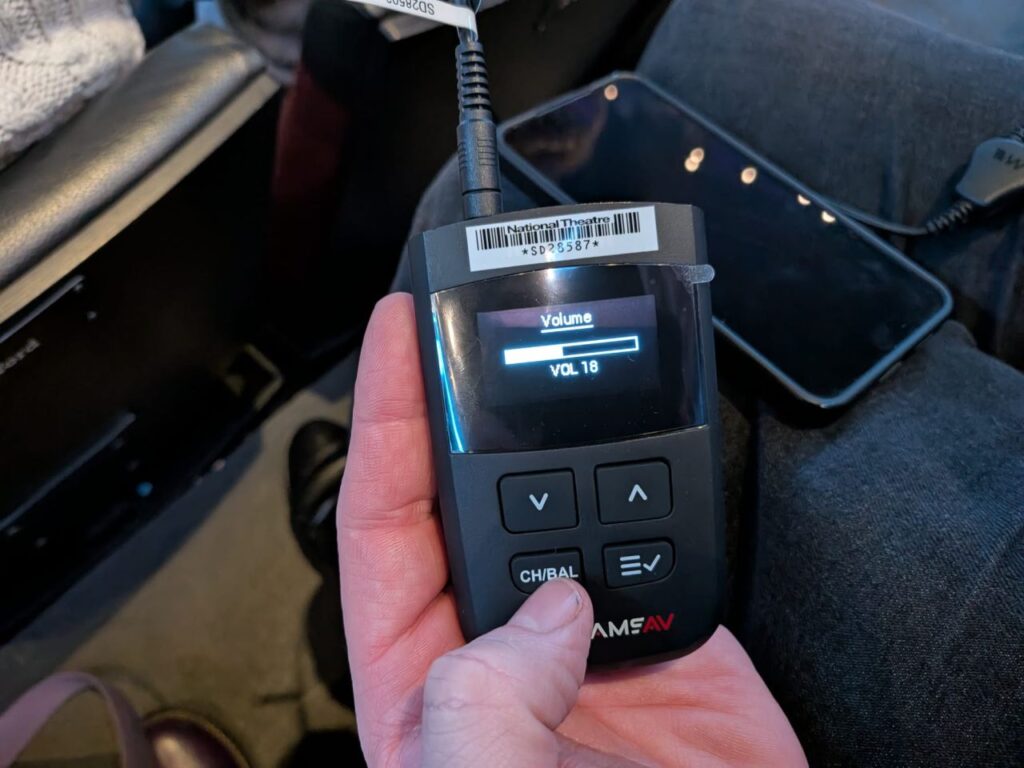
Theatres can choose from a range of Auracast systems, and the National Theatre has installed the Williams AV Infinium. We spoke to the team at Williams about this system last year and this is the first time we have experienced this system.
Auracast standard delivers real-time, low-latency, high-fidelity audio distribution to multiple compatible devices and should remove traditional barriers to assistive listening.
The team at the National Theatre has one transmitter discreetly installed in the auditorium. This is proving sufficient for the space, even when the Bluetooth LE Audio signal is competing for bandwidth with all the other technical gubbins going on.
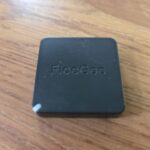
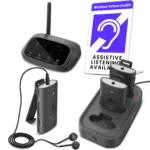
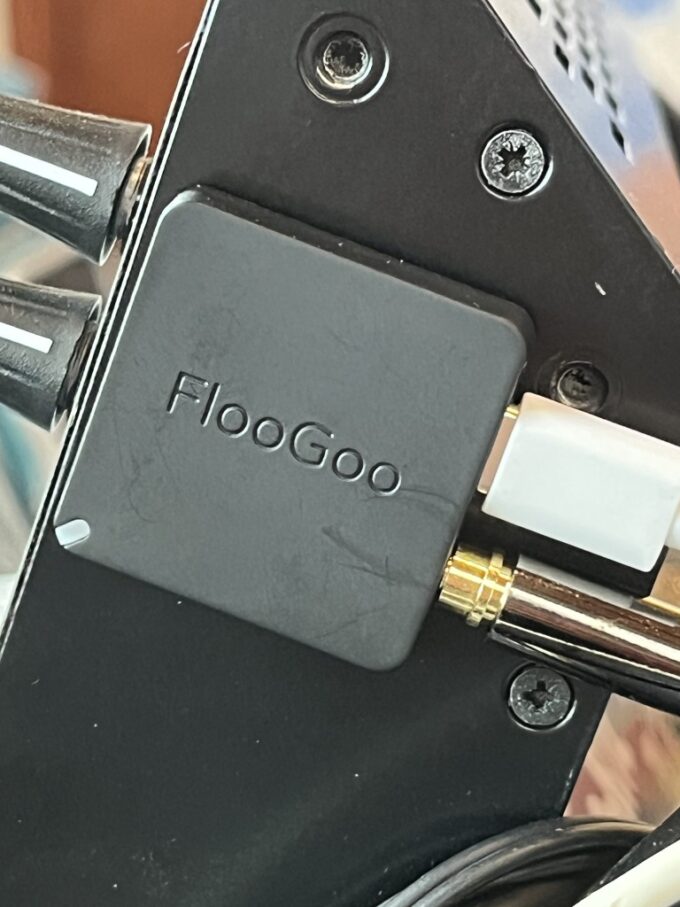
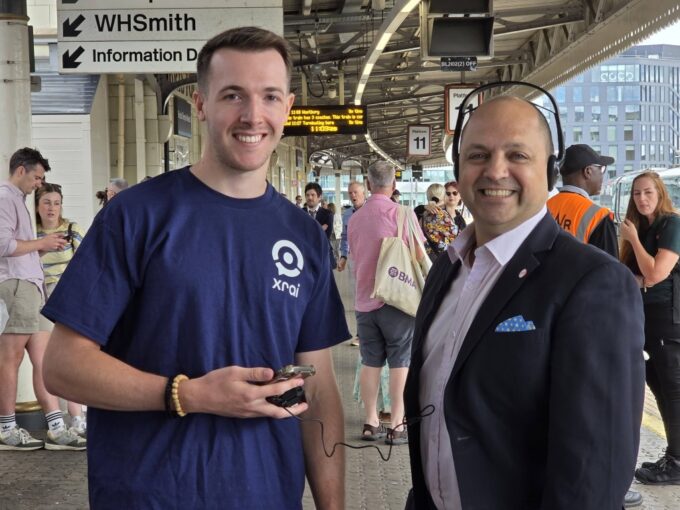
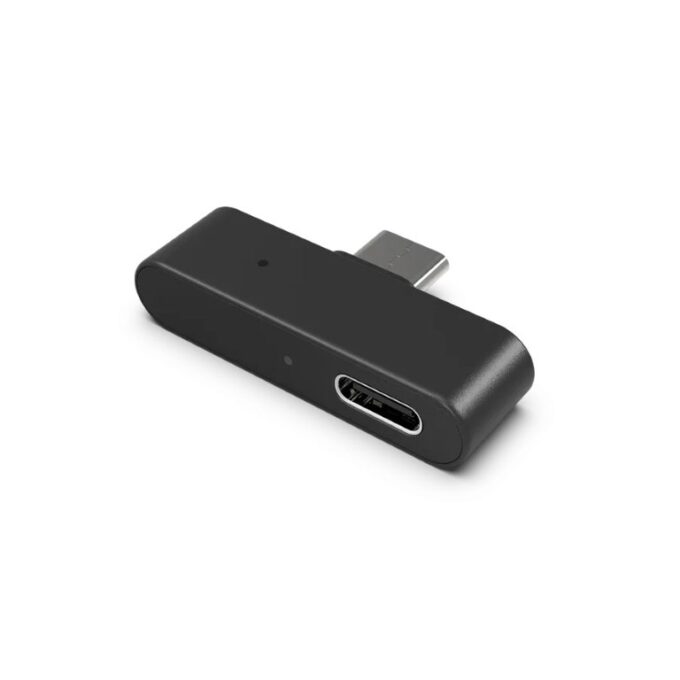
Like Auri and Bettear setups, the Williams AV Infinium set up have receivers that patrons can borrow if they don’t have Auracast-enabled listening devices of their own. We call these pebbles because they are about the size and shape of a pebble found on a beach.
Via a 3.5mm headphone jack, they can plug in a personal loopset or traditional headphones. The National Theatre has 20 of these that can be borrowed and returned from the cloakroom, but it is anticipated that, as more people acquire their own Auracast-enabled devices, they will bring their own preferred kit to the theatre.
What did we watch … and did the Auracast work?
The trial of Auracast is taking place at the National Theatre’s Dorfman Theatre, during the run of Man and Boy; Terence Rattigan’s tale of fatherhood and corruption, and director Anthony Lau’s National Theatre debut. Ben Daniels and Laurie Kynaston play father and son Gregor Antonescu and Basil Anthony
Set in 1930s New York City, it fuses Jazz, Broadway and the Great Depression as the luck of international financier Gregor Antonescu finally runs out. As news of a catastrophic business deal ripples across the world, he flees to the apartment of his estranged son Basil.
Truths are uncovered, and relationships are tested as Gregor gets down to business to save his reputation and keep his empire from collapsing.
Perhaps the best way to envision the theatre set is as a boxing ring. The audience is seated on all four sides of the stage, so you can see the show four times and get a different perspective each visit. It also means the cast are completely exposed when on stage: there is no hiding place for them.
There is a lighting rig above the set that moves up and down at various points to enhance emphasis and nuance. It’s effective, but some may find this unsettling.
Additional accessibility from the National Theatre
If there is one thing to be said about the National Theatre, it is that it takes accessibility very seriously.
In addition to the Auracast trial, it has arranged some other ways to make the place accessible.
There are captioned performances on Saturday, 21 February at 1.30pm, and 7.15pm on Wednesday, 11 March.
An Audio Described show is held at 1.30pm on Saturday, 28 February, with a touch tour of the set from noon.
A British Sign Language interpreted performance will be held from 7.15pm on Thursday, 5 March.
Finally, for those who need a relaxed performance, this takes place on Tuesday, 10 March, from 6.30pm.
And what about the Auracast?
Man and Boy is an interesting choice for an Auracast trial run, as the cast play people from different countries, meaning there is a wealth of overlapping accents to decipher, from Eastern European to broad American. That can be a struggle for anyone.
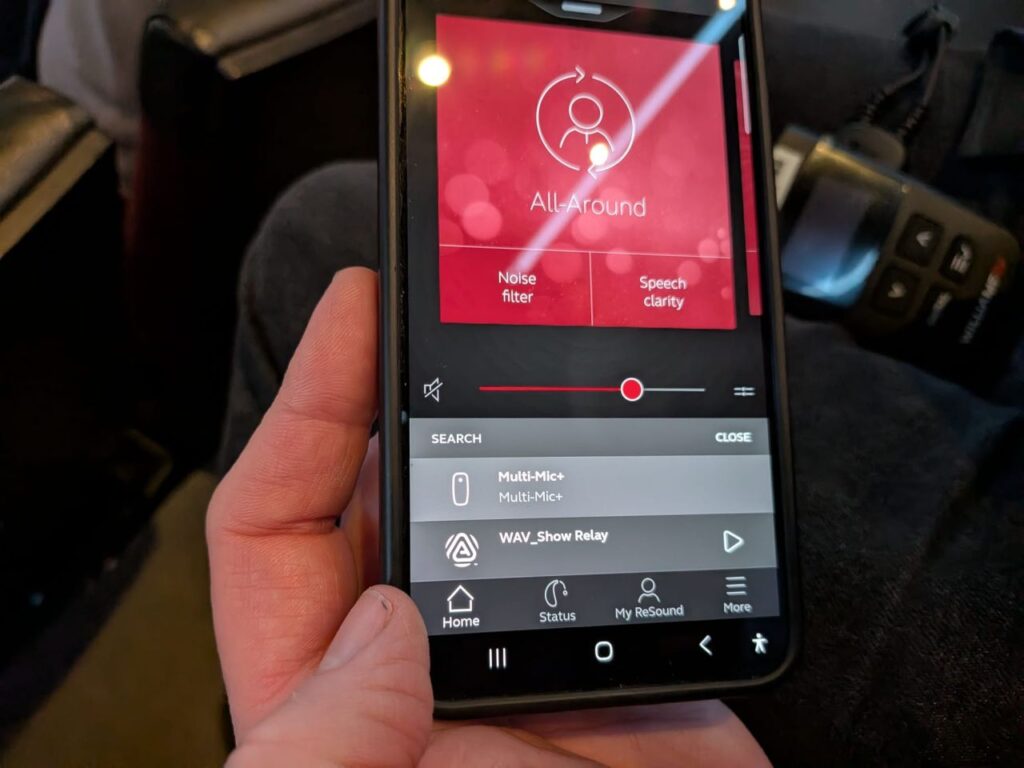
The Williams AV Infinium system broadcast audio loud and clear, making it easy to understand what was being said. We could choose from
We tested both our hearing aids and a loop set: our ReSound Vivias connect via a button press in their Smart 3D app, while the MultiMic+ has a Telecoil mode. To test the loop, we wore the MultiMic+ on our shirt lapel and, using a borrowed receiver unit with a neckloop from the National Theatre, heard the broadcast.

After the show, we spoke with an audience member who had borrowed headphones instead; they were able to hear even though their hearing aids don’t support Auracast. They reported hearing white noise at a few points, but we weren’t sure whether this was part of the play or something everyone in the auditorium experienced.
This is great – it shows that an Auracast system offers accessibility for all three use cases: those with Auracast-enabled hearing aids, those with a Telecoil in their hearing aids, and those who can wear headphones.
One caveat: listening fatigue can set in when you have to concentrate on listening, and a play with thick accents is especially challenging. So to help me, I used Google Live Transcribe to display live subtitles on my mobile phone. It wasn’t perfect and served more as a comfort blanket, but it was really useful for moments when the dialogue was hard to decipher.
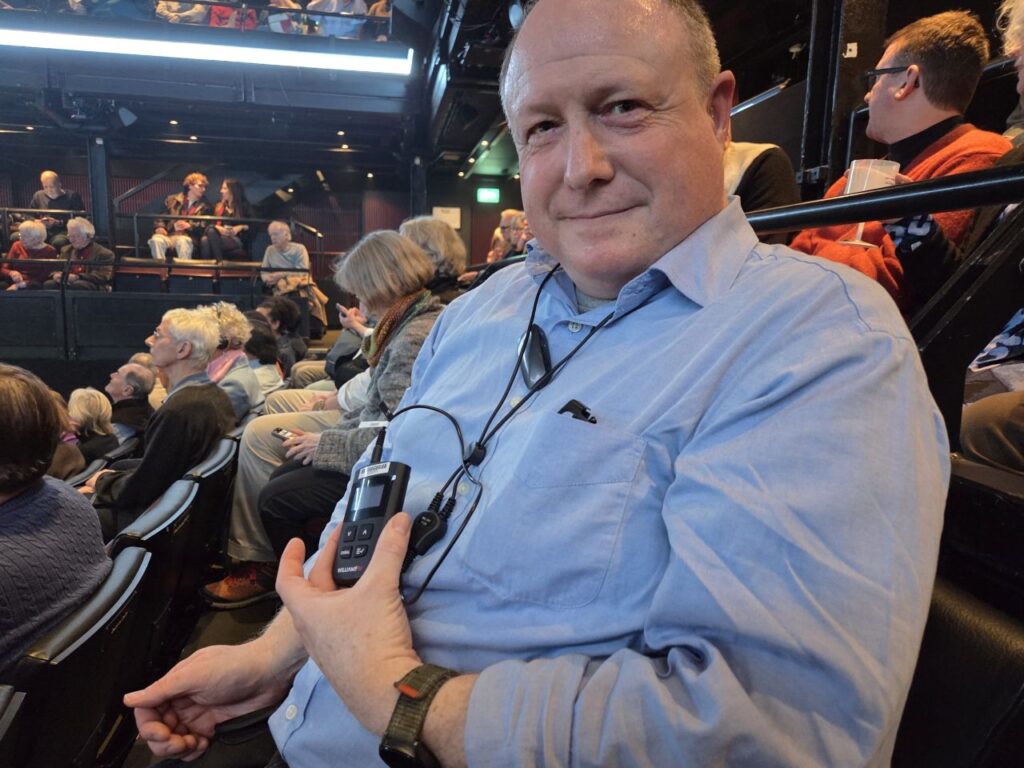
Overall, it was a positive result. It was easy to connect to Auracast, regardless of the method used to receive the audio, and it performed exceptionally well.
Auracast transforms the theatre experience: instead of struggling to hear some words, let alone all of them, it makes listening effortless. The National Theatre has raised the bar with this trial, and we look forward to others following suit.
For more details on Man and Boy, or to book, log on to: https://www.nationaltheatre.org.uk/productions/man-and-boy/.

Aurahear in your inbox!












Leave a comment