

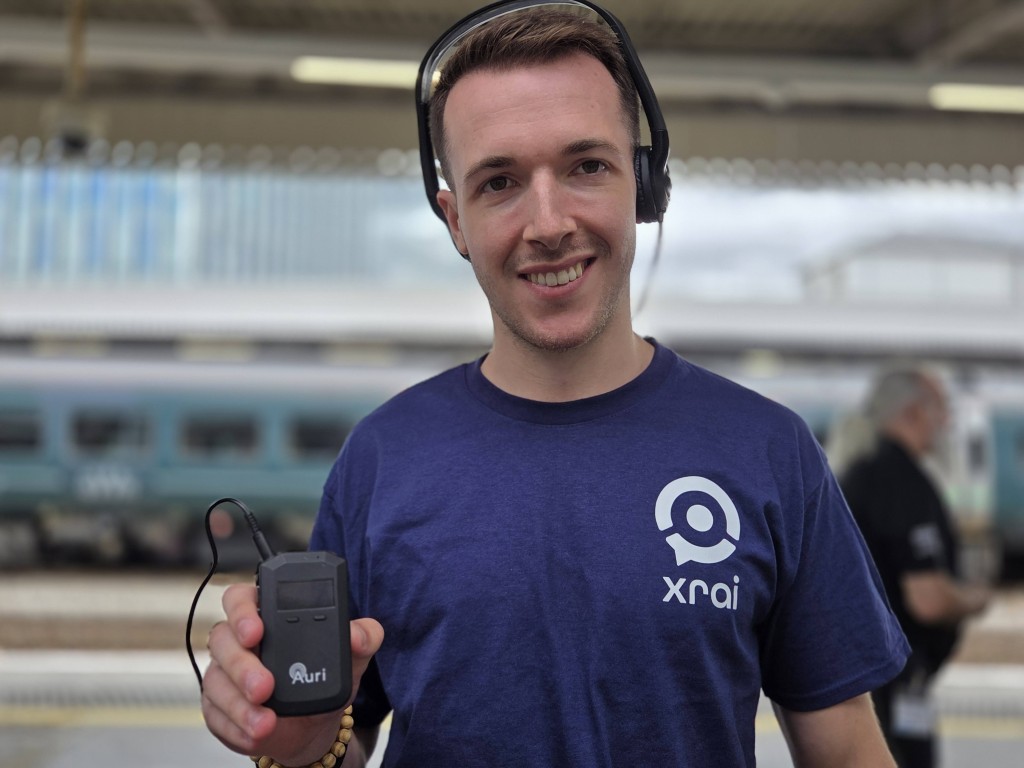
The launch of a new Auracast trial at Bristol Temple Meads railway station showcases the promise of the technology, and also acts as a reminder of some of its current limitations.
Live translation from convention floors to platform nine
Last year, I attended the EUHA convention in Germany. On the first day, there was a tour of the exhibition area, given in German. Our translator, a truly wonderful man, spoke Swiss German; instantly translating the German into Swiss German and then into English. For someone who can’t even master his native tongue, this was mindblowing – and I was very grateful for the accurate and clear summaries of what was on show.
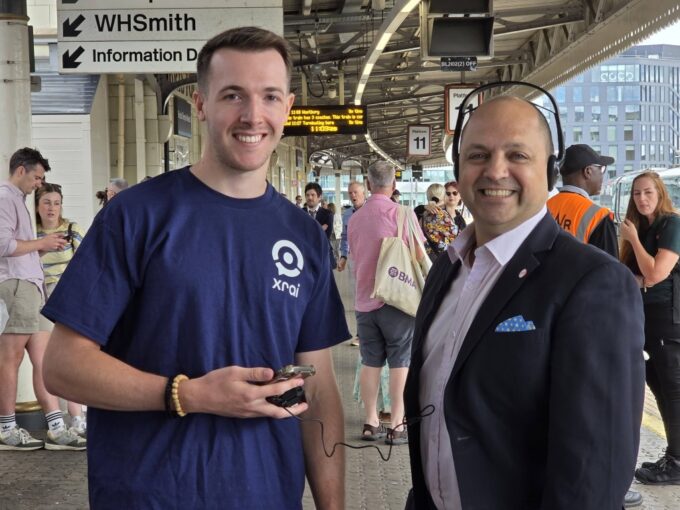
Bristol Temple Meads showcases a similarly exciting translation service that demonstrates the versatility of Auracast as a helpful solution to public transport.

Developed by XRAI and Ampetronic, a three-month pilot scheme is currently being delivered through the Station Innovation Zone programme, led by Connected Places Catapult in partnership with Network Rail. This delivers Auracast announcements to passengers on platform 9, not just those who speak English, but up to 100 different languages – all generated on-the-fly by a localised AI source.
It’s impressive.
It’s easy.
It’s mind-blowing.
Putting Bluetooth audio technology to the test
The launch event, held on Thursday, 6 August, was a perfect day to demonstrate the technology, as there was a fault on the line caused by a buckled track. Services were delayed or cancelled, while some trains were rerouted to different platforms.
For those who have never visited Bristol Temple Meads before, this is a large station. There are 15 platforms, connected by an underground tunnel. Parts of the station are Grade I listed, and there is a real sense of history about the place. It’s also very busy.
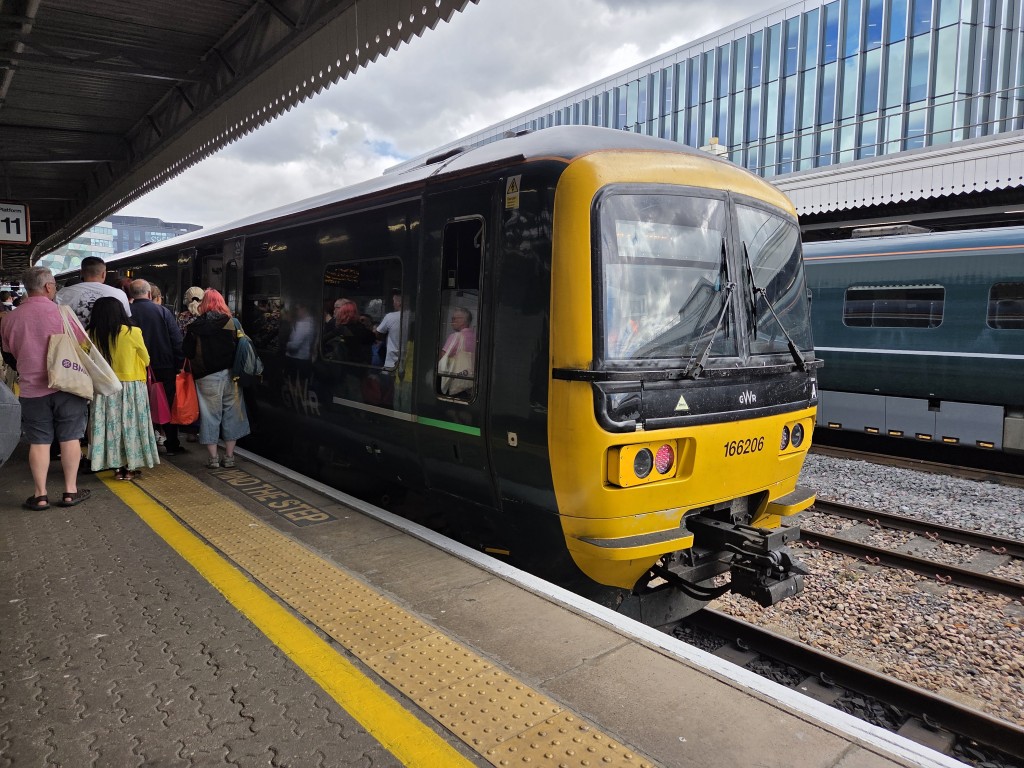
So if anywhere is a good place to demonstrate how Auracast can make a difference to passengers, this is it. It cuts above the noise – and there is a lot – to give people the information they need about platform alterations, delayed trains and those services that have been cancelled. The clarity of the announcements is something special. One of the Network Rail staff told me they were being made aware of announcements that they didn’t realise were being made; that’s how good it is compared to the garbled mush that comes out of the ancient speakers that are no doubt riddled with dust, cobwebs and goodness knows what else.
How passengers access the live translation stream
To access the Auracast, it’s a case of opening an Auracast Assistant and clicking on the broadcast you want. In this case, there are two streams: English or the live translations. And then just listen. It can run in the background, as the Auracast will only pipe up when a new announcement is being made.
This is an exciting use of the technology, and it has real benefits for commuters. I was reminded of this at the very start of my journey from Reading to Bristol: the platform changed at the last minute. I was standing waiting for it to arrive, oblivious to the announcement that had been made alerting people to the alteration. Had it not been for a guard working on the platform, I would have missed the train.
So what of the translated announcements? Well, they come thick and fast mere seconds after the English version had been made. No doubt advancements in computing processing speeds will ensure they are in real time at some point in the future, but for now there is that short delay.
Overcoming current technical limitations
But they come one after the other, so those whose first language isn’t English will be left waiting for their announcement to appear. On one hand, this is a limitation of the technology, but on the other, it’s impractical to offer people a choice of 100 different Auracast streams. Perhaps a future development could be a choice of default languages in the Assistant app, so if multiple language streams are available, they are automatically hidden and only the pre-selected ones are shown.
It’s also possible to add flag emojis to the Auracast stream description. This is a simple way to help people understand which languages are available.
Another problem is that people waiting for a train usually have a distraction while they wait. That could be reading a newspaper or doomscrolling on their phone. Others will be listening to music or podcasts.
At the moment, the choice is to switch on the Auracast or the podcast. It’s one or the other.
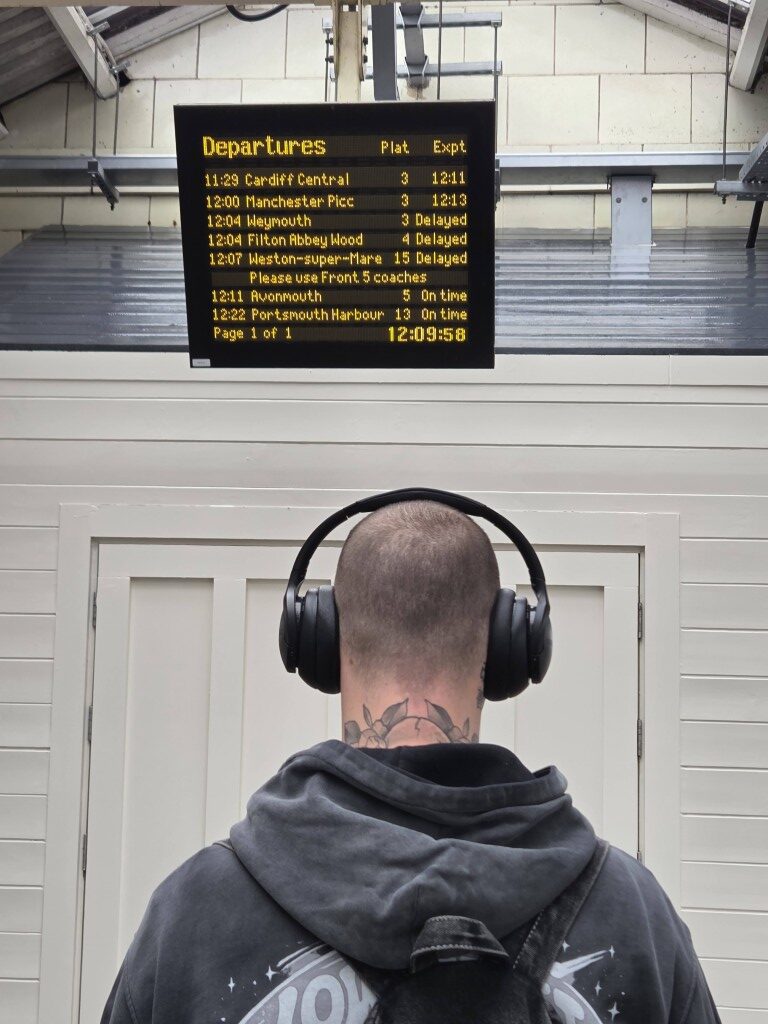
Hopefully, at some point in the future, the technology can be developed so that the Auracast signal contains ‘cut-through’ tags in the same way the RDS worked in radios, allowing people to listen to their preferred station and then switching when a traffic bulletin came on. This would allow passengers to continue enjoying their own entertainment while not worrying about missing an announcement.
But these are quibbles. From first impressions, this is going to be a successful trial and hopefully Network Rail will be eyeing up other stations where the technology can be installed.
Aurahear in your inbox!













Leave a comment