

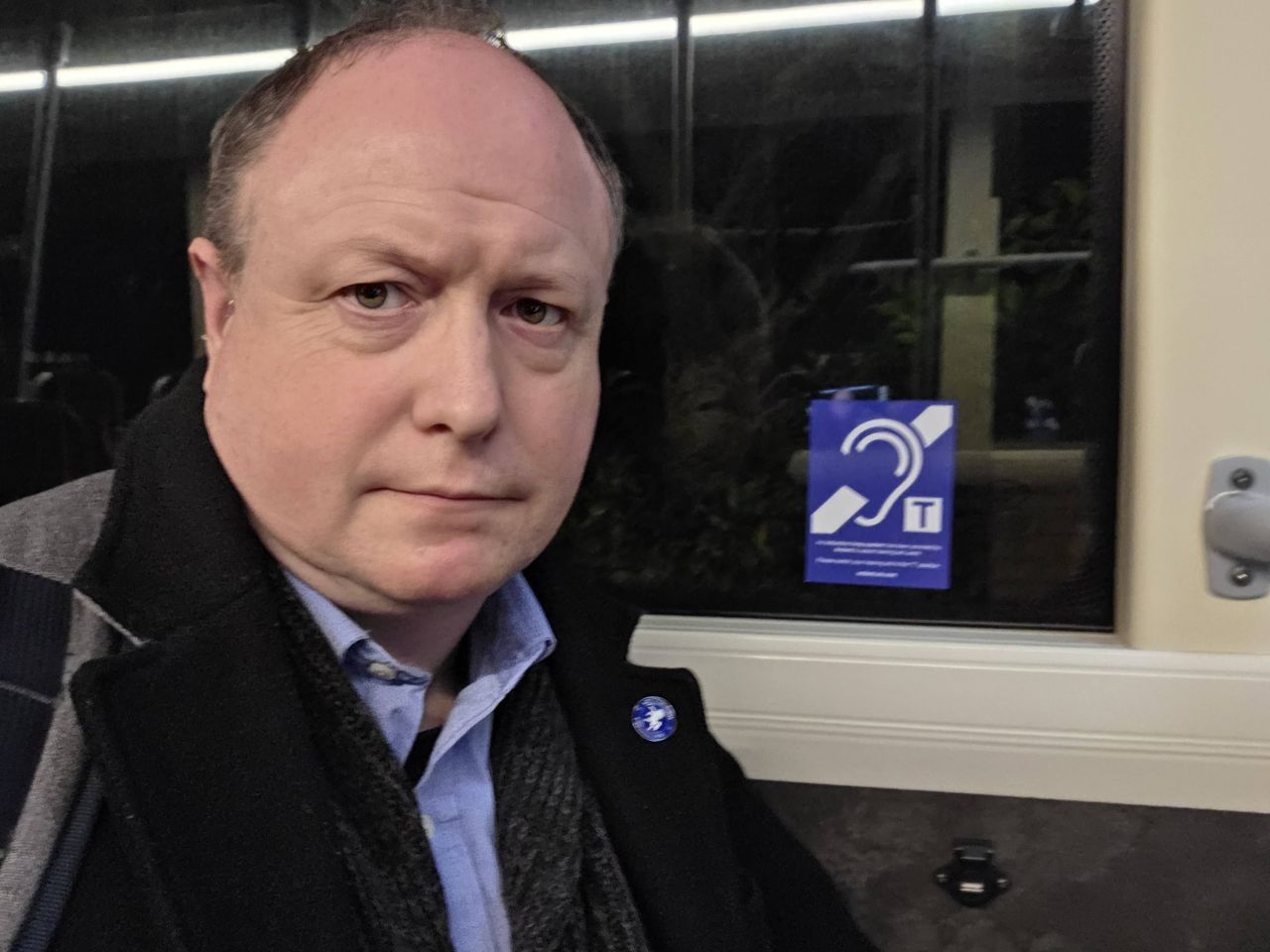
Regular readers will know that we want to see Auracast installed in public transport, including buses and trains.
This post comes on the back of Frankfurt Airport installing Auracast at two passenger gates in a special trial of the Bluetooth LE Audio technology.
We believe that Auracast is a better solution than Telecoils for a myriad of reasons.

For example, the sound quality is better, and it is easier to connect to an Auracast broadcast. Of course, some will argue that it’s easier to push a button on the back of a hearing aid to connect to a Telecoil – as opposed to pushing a button on a mobile phone app – but controlling via a mobile phone is more discreet, and some will prefer that.
The biggest advantage of Auracast is that you can sit anywhere in a venue. This is a significant advantage for public transport, especially on busy buses.
Our experiences of Telecoils on a bus
We are based in Reading, which has a brilliant bus network. Each route has its own colour, and buses are painted accordingly. That purple bus? It can only be the backbone of Reading … the number 17. Sky Blue? That’s the one that will take you to IKEA.
It’s simple, fairly easy to understand and works well.
Many bus stops have real-time information, and the company recently installed talking points at some of them to allow people with visual impairments to access the same information. Sadly, they are not Auracast enabled but it is a step in the right direction.
On board, many of Reading Buses’ fleet have information screens displaying the next stop, and there are regular announcements to hear … if you can.
This is helpful if you are new to town and know the name of your stop but not its location. All you have to do is bus stop, look and listen.
For deaf people, it’s hard to hear an announcement amid the bus engines, road noise, and even people chatting. We have good news: some buses have been fitted with Telecoils.
Or it would be if they all worked.
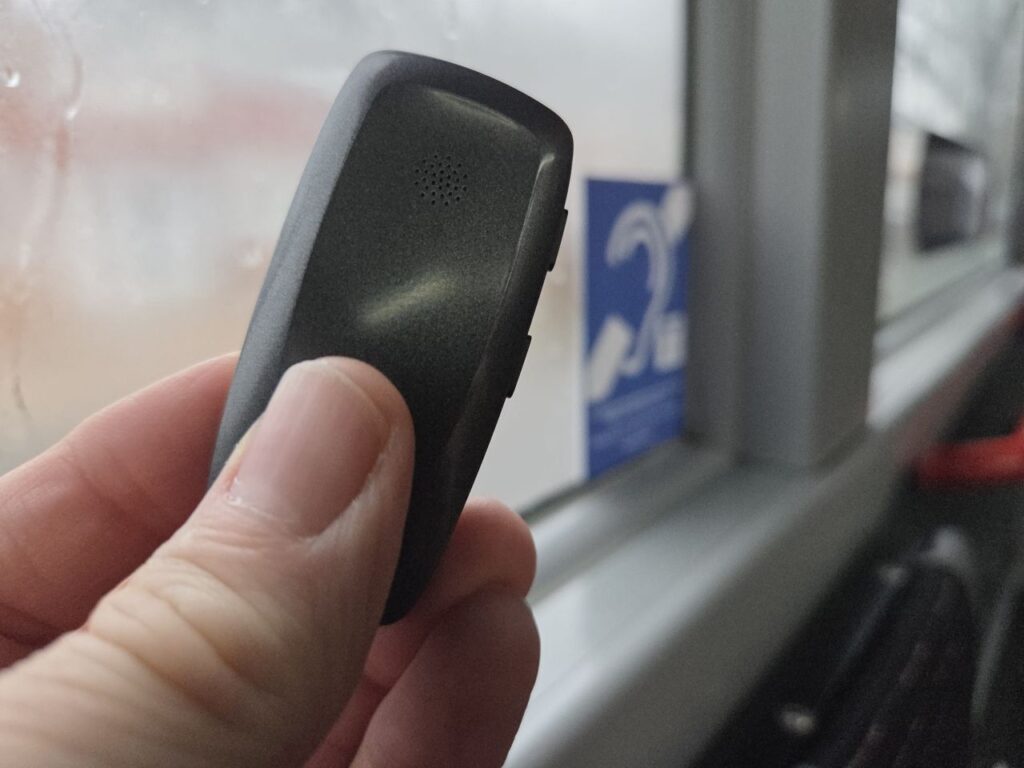
We have been testing the Telecoil function on several buses in recent weeks, but it doesn’t always work, and when it does, the speech is competing with white noise and electrical humming. It’s just not the same as Auracast’s clear sound.
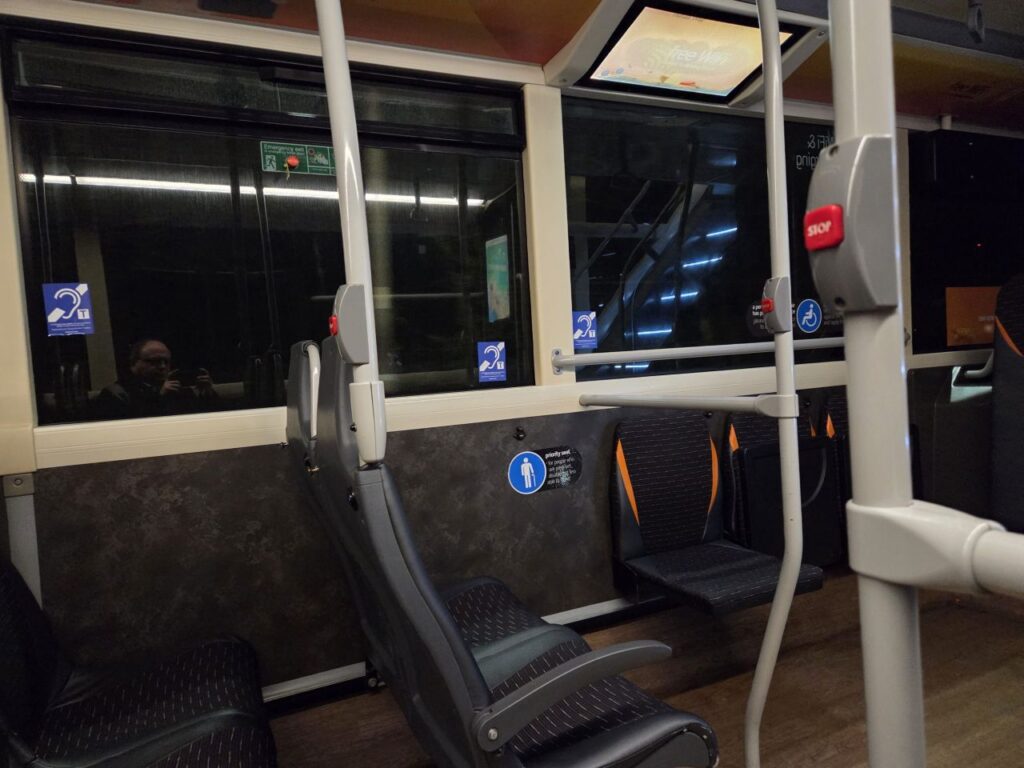
To use the Telecoil, you must be within the designated area of the bus reserved for passengers with additional needs, such as bringing a buggy with a small child on board, using a wheelchair, or being an older passenger with mobility issues.
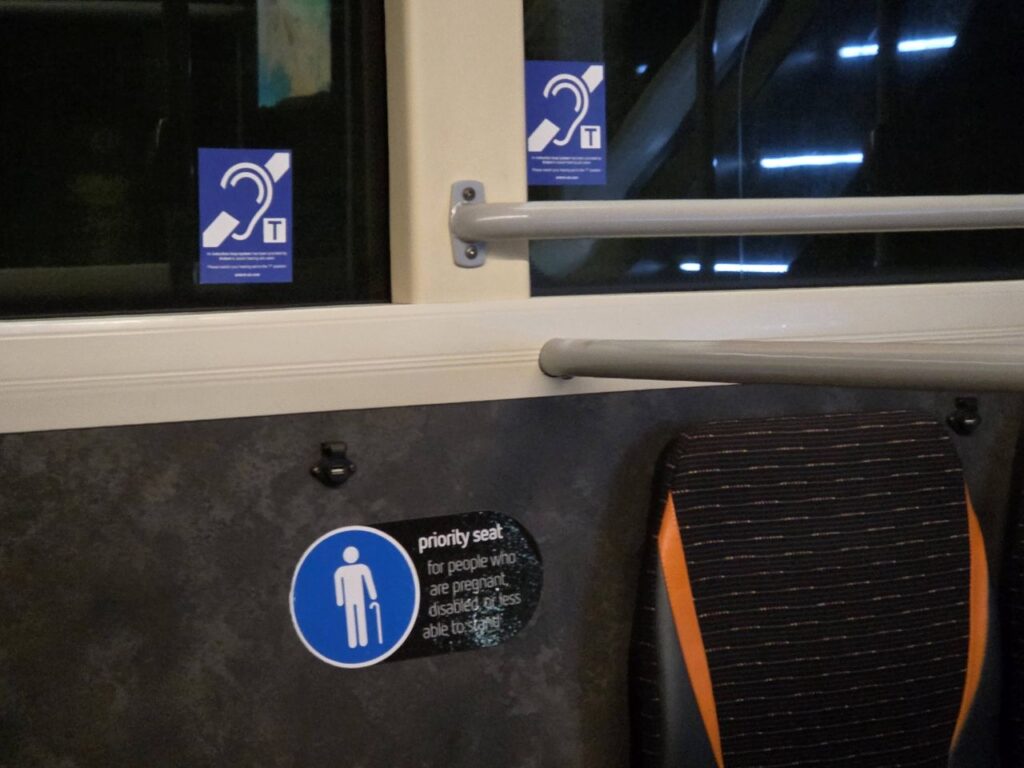
The seats within the Telecoil range are marked with a Telecoil sticker on the window next to them. Only those seats have access to the sound.
While we found one bus with a working Telecoil, the ones that didn’t produced an electrical hum, so we knew it was working, but there was no announcement.
We muted the hearing aids ambient sound to avoid any false positives, and we also unmuted the ambient sound halfway through an announcement to confirm passengers were not being informed.
Unfortunately, this is a common experience with Telecoils in public places: they are not switched on, or, if they once worked, they are not tested regularly to ensure they still do. So, we are not doxxing Reading Buses – honestly, there is no better way to get around Reading than the brilliant bus network, and they are trying with accessibility.
But we long to see Auracast in buses – not just Reading’s buses, but all buses – so we can sit anywhere and not be in danger of missing our stop, because we heard it announced loudly and clearly.

Aurahear in your inbox!











Thoughtful article.
Telecoil has served the community well for nearly 100 years — it’s made a real difference in public spaces. But as listening technology continues to evolve, it’s exciting to see modern broadcast solutions like Auracast opening up new possibilities.
At Avantree, we’d love to sponsor a real-world trial with any transit operator or venue interested in exploring this next step.
Appreciate you continuing the conversation.