

Auracast is a new Bluetooth LE Audio standard that comes in transmitters of all shapes and sizes. The smallest is the size of a USB stick, while the largest will fit neatly into an AV rack. The difference is more than price: the features will vary too.
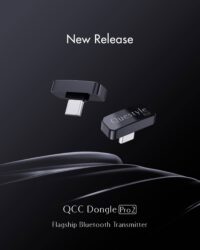
Some of the very smallest dongles are designed to be portable and more personal, adapting mobile phones to become devices capable of receiving Auracast for those who have Bluetooth/ASHA/Made for iPhone streaming, but not the new technology.
Venues have different considerations, particularly around their country’s relevant consumer law/equality act/discrimination rules. Essentially, for large-scale venues such as theatres, stadiums, and university campuses, consumer-focused dongles are insufficient. Instead, they require what we call Professional Grade Auracast systems.

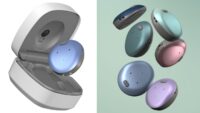
They are designed for round-the-clock reliability, network management, and high-capacity broadcasting, and – crucially – backwards compatibility with Telecoils and headphones. This comes from the small receiver units, which we call pebbles, that can be issued to customers. They will have 3.5mm jacks built into them to allow a portable neckloop or wired headphones to be plugged in, ensuring they can be used by those who still need to acquire an Auracast-enabled hearing aid, headphones set, ear buds or Cochlear.
In 2026, there are several such systems.
Ampetronic | Listen Technologies makes Auri, Opus has the AuraGate, Bettear has its B-Caster system, and Williams AV has the Infinium. These systems are typically integrated into the venue’s existing AV rack and connected to the main mixing console. They can also work with Dante (Digital Audio Network Through Ethernet) setups.
Another solution is Avantree’s setup, which offers receiver units that can be integrated into its Auracast box. This is a different proposition from the true professional-grade systems, which can become an integral part of the AV desk rather than receiving the feed. The Avantree’s cost may make it more suited to the smaller venues, such as places of worship or village halls.
Ampetronic | Listen Technologies
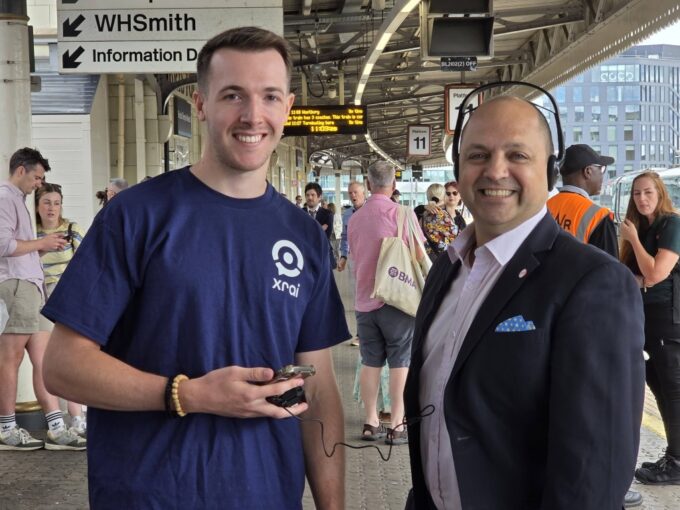
Ampetronic and Listen Technologies have developed the Auri system, a professional-grade solution that has been used in theatres, railway stations, and arenas.
This system is built to be a robust replacement or supplement to traditional hearing loops, meeting international accessibility standards. Users can borrow receivers, and up to two 3.5mm headphones can be plugged in at any one time.
The Auri TX2N transmitter is specifically designed for the modern AV rack and features native Dante support. This allows venue managers to pick up any existing digital audio feed from their Dante network and broadcast it directly to Auracast-enabled hearing aids or receivers without needing to convert the signal back to analogue.
Its Auracast transmitters are available in white or black, and the company says it can install its kit at a venue in just 45 minutes.
Bettear
Bettear produces the B-Caster and B-RTX systems, which are engineered specifically for high-fidelity assistive listening in public venues. Their technology focuses on delivering low-latency audio that remains synchronised with visual sources, such as cinema screens or live speakers.
Bettear offers a hybrid software ecosystem that allows users to manage the stream via an app, and its transceivers (the pebble that people can borrow) can both receive and transmit audio. This means it can be used for tours in venues such as museums.
It also offers strong password-protected functionality, which is ideal for courtrooms, banking counters and other venues where sensitive information needs to be heard for a select few.
Opus Technologies
Opus Technologies offers the AuraGate, a dedicated Auracast broadcast terminal designed for straightforward integration into existing venue infrastructure. It is built to be versatile, supporting a wide range of input types to accommodate everything from simple microphones to complex public address systems.
The AuraGate is highly adaptable for legacy systems, featuring 100V line inputs alongside standard balanced audio connections. It says that the AuraGate’s AuraConnect app works on Android and iOS and offers a three-click configuration process to save time.
While Opus Technologies provides comprehensive digital processing, the AuraGate does not currently offer native Dante connectivity on the base unit, though it can be integrated into such environments via external Dante-to-analogue converters.
Its transmitters can also be bought in white or black versions, while the user pebble is called the AuraSTRX. It can transmit and receive Auracasts and use QR codes and NFC to connect to Auracasts.
This is the only Auracast system we have yet to experience.
Williams AV
Williams AV has integrated Auracast into its ecosystem with the Infinium AV system. The aim is to provide a unified approach to assistive listening. Its advantages include a single CAT cable installation, a low-profile transmitter, and integrated Dante connectivity.
With network management, the Infinium enables programming and real-time monitoring, either directly at the controller or remotely via network access.
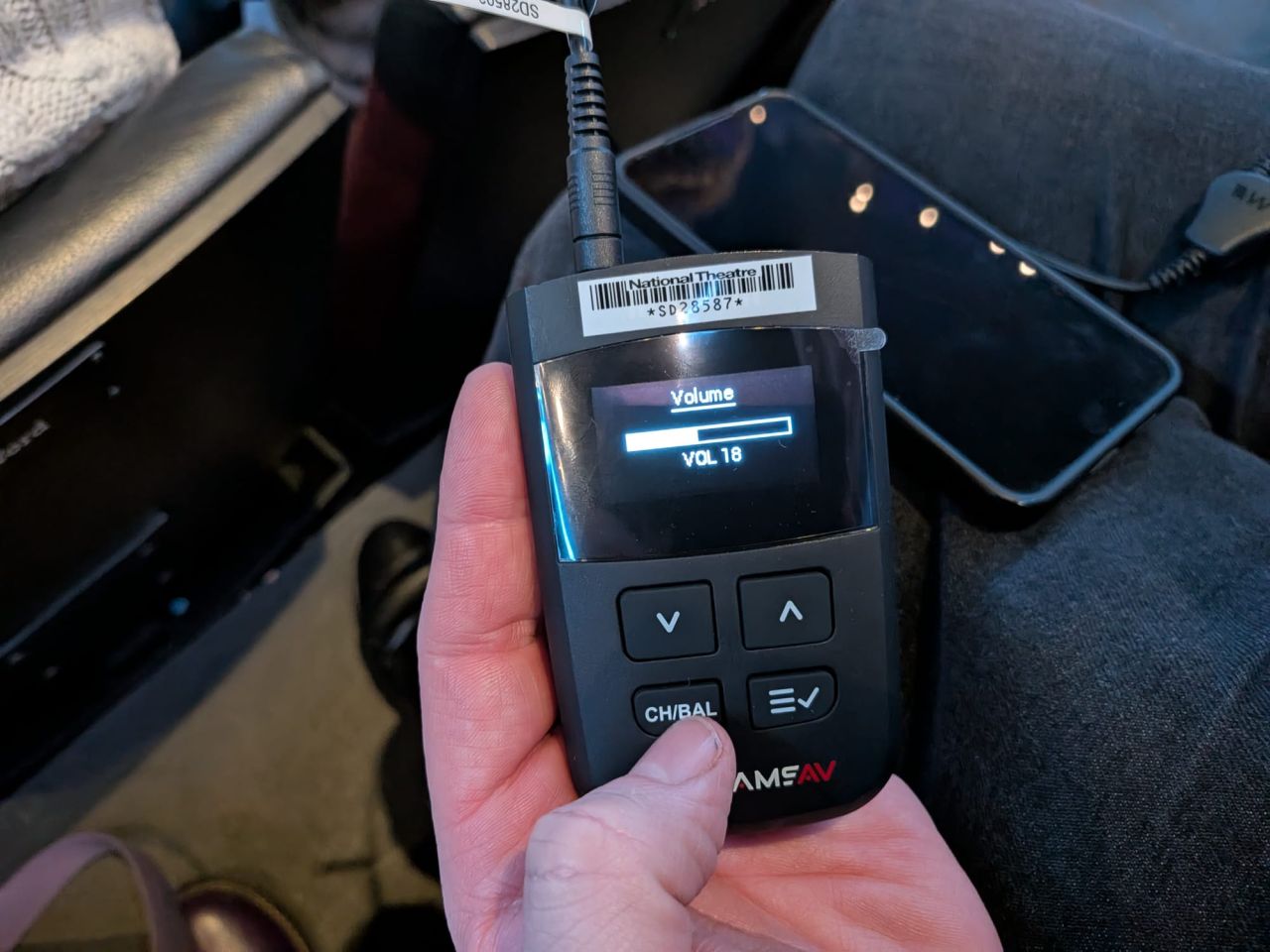
Its Infinium R1 Auracast Receiver has been ergonomically designed to fit neatly in the hand and can be worn around the neck or clipped to clothing. Easy-access buttons let the user adjust the balance and volume, while the unit as a whole offers secure and open audio modes.

Aurahear in your inbox!












Leave a comment