

In many countries, providing assistive listening solutions like Auracast isn’t just about being a good business, it’s ensuring compliance with laws aimed at improving accessibility in the world around us.
Now, we are not legal experts, and the rules vary according to country, so this article is intended as an introduction to the topic. We encourage every venue to seek specialist advice to ensure compliance with local laws.
While we advocate for Auracast installations with backwards compatibility, we acknowledge that until Auracast has reached critical mass – eg, it is available as standard in NHS hearing aids – then it is important that venues continue to maintain existing Telecoil installations. We feel that any new installations should be Auracast with backwards compatibility. This ensues people won’t be left behind while institutions and their hearing aids make the leap into the future.

Broadly speaking, regardless of where companies are based, they need to be able to make reasonable adjustments to a venue or a workplace to allow people of all abilities to be able to work there or visit for an event, seminar etc. That could include hiring an interpreter who can sign sessions or providing live captioning.
For assistive listening setups, there is a range of solutions that can include the traditional Telecoil loop, Wi-Fi systems, and infrared. They all have drawbacks, for example an infrared receiver can have its signal blocked if the user is wearing a scarf over it, while a Telecoil will require people to sit within a certain area of the building to pick up the signal. Sound adjustment can also be tricky, meaning listeners can struggle to get the volume to a comfortable level.
The UK: The Equality Act 2010
The UK introduced the Equality Act in October 2010, bringing together more than 100 pieces of legislation to help protect people from discrimination in the workplace and wider society. It is based on nine protected characteristics: age, disability, gender, marriage and civil partnership, pregnancy and maternity, race, religion or belief, sex, and sexual orientation. The Act does not apply to Northern Ireland.
The aim is to prohibit direct discrimination, harassment and victimisation, while also requiring employers and service providers to make reasonable adjustments to enable disabled people to participate in everyday life.
The aim is to provide positive action, while setting out potential punishments for breaches of the act, and it is wide-ranging in scope. For example, it specifies how the act can support disabled travellers using taxis, what information bus companies need to provide and how to share it, and how the public sector should treat equality.
The RNID notes that ‘reasonable adjustment’ includes changing the layout of a meeting room to make lipreading easier, providing communications support in meetings, installing equipment such as flashing-light fire alarms, and ensuring people can have time off for audiology appointments.
The charity also notes that “some adjustments may not be reasonable for (the) employer to make because of the cost or the effect on their business. In this case, they should work … to find alternative ways to support (people)”.
When it comes to assistive listening, Ampetronic – which makes the Auri Auracast system – is helpful, explaining that Section 20 of the Equality Act 2010 sets out the legal duty of companies to make reasonable adjustments and anticipate these needs. Failure to do so could be considered discrimination.
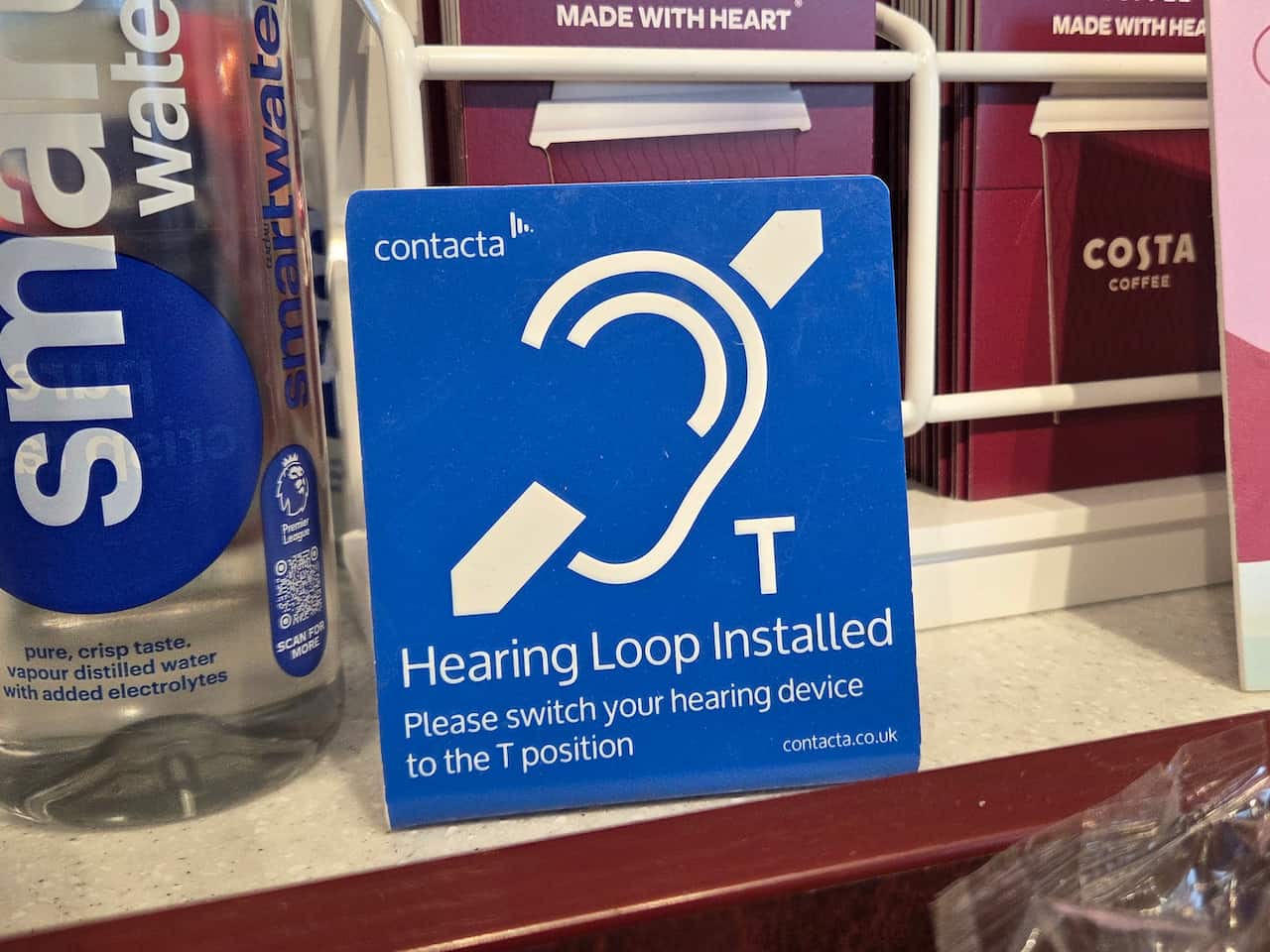
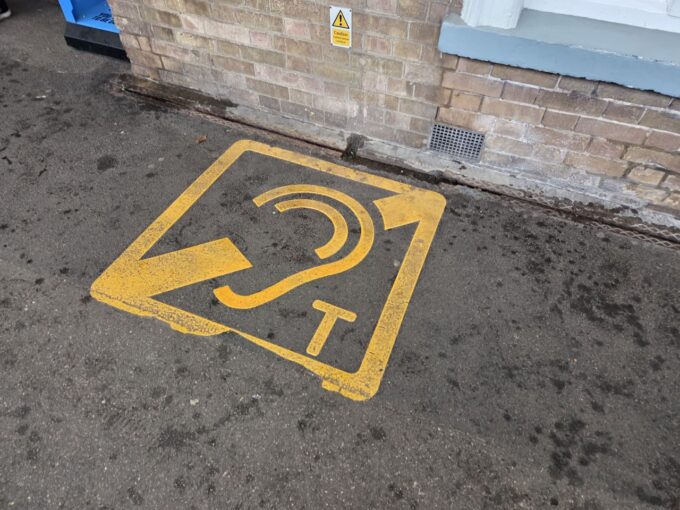
The act covers rooms used for meetings, lectures, classes, performances, films, and service or reception counters when situated in noisy areas or behind glazed screens. Venues must also indicate these systems are available by displaying the appropriate symbol.
For assistive listening the Act does not list specific devices, but the EHRC Statutory Code of Practice on Services, Public Functions and Associations specifically mentions the use of assistive listening solutions. Rule 7.47: “An auxiliary aid or service is anything which provides additional support or assistance to a disabled person” cites induction loops and infrared systems, while the British Standards document number BS 8300 states that Induction loop systems should conform to BS 7594 and BS EN 60118-4.
It is important to bear in mind that this legislation was enacted in 2010, long before Auracast became a standard. Ampetronic notes: “In general, legislation tends to demand solutions where it can be shown to be reasonable that equal access can be provided”.
The wording is sufficiently open to allow for newer technologies to be included: Auracast can be an accessible solution.
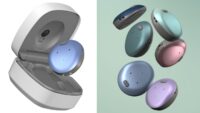
At Aurahear, we call installations such Auri and Bettear “professional grade” because they include “pebbles” – receiver units that can be borrowed from the front desk or cloakroom of a venue. When a personal loop is plugged in they offer backwards compatibility for those whose hearing aids have a Telecoil, while those without may be able to use wired headphones.
As such, we believe that professional-grade Auracast installations more than meet the requirements of the Equality Act 2010 – and it could be argued that a solo Auracast transmitter, such as a HomeSpot BA210, would also meet the requirements, as it is a reasonable adjustment if installed in a community hall or small church. However, we are still some years away from Auracast being standard in every hearing aid, so it can be argued that the setup is not reasonable at this time.
The Act can be read in full here: https://www.legislation.gov.uk/ukpga/2010/15/contents
The United States: The Americans with Disabilities Act
The United States of America has a similar version of the UK’s Equality Act: the Americans with Disabilities Act (ADA). The aims will be familiar, though it differs slightly in that venues are required by law to provide a specific number of receiver units based on their seating capacity. It is detailed in sections 219 and 706 of the act.
As with the UK-based act, the ADA does not set in stone which assistive listening systems are compliant. Instead, venues should meet legal and technical standards. The Hearing Loss Association of America (HLAA) has published guidelines on Auracast and the ADA, which can be read here. They note there is some confusion about whether the new Bluetooth LE Audio standard meets the act’s requirements, given that it lists infrared and FM assistive listening systems as examples. This document dates back to 2010, again before Auracast existed.
“Just as an improper deployment of infrared will not comply with the ADA, a thoughtful deployment of Auracast can meet or exceed the ADA’s requirements,” the HLAA notes.
Again, it comes down to ensuring the Auracast system offers backwards compatibility for those with Telecoils in their hearing aids, or to allow them to borrow headphones to tune in to the audio being Auracast. This meets the spirit of the law, even if the law hasn’t yet caught up with technology.
The ADA requires venues to provide receivers based on their seating capacity: for example, venues with 50 seats or fewer must have at least two receivers, while those with more than 2,001 seats need 55 plus one per 100 seats over 2,000, with one in four of these being compatible with hearing aids.
There is more information on the website Assist2Hear.com
The European Union’s European Accessibility Act
This was introduced in June 2025 and aims to establish common accessibility rules across the European Union. The standardisation should reduce costs for companies, as the same protocols will be in place across countries such as Spain, Italy, Germany, Hungary, and Poland. The other advantage is for consumers: they will be able to access more products and services and experience fewer barriers to transport, education, and the job market.
The full act can be read on the EU website. It covers a range of products and services, including smartphones, computers, televisions, banking services, telephony, check-in machines, and ATMs.
The standards apply to a range of situations, including transport, shops, banking, hospitality industry, museums, theatres, town halls, places of worship, and event and conference centres.
As with the US, venues are required to provide receiver units, but it is not a numerical requirement: the venue must be able to prove that their system provides “effective communication” for the expected audience. Under EU EN 17210, venues must ensure that a ‘sufficient number’ of receivers – typically 1% to 2% of capacity – are available, while prioritising a high Speech Transmission Index (STI) to ensure the audio is actually intelligible across the entire footprint of the stadium.
More details can be found on the European Federation of Hard of Hearing People, which has published accessibility guidelines. For more, click here
There is more work being done to create standards that people can adhere to: the International Electrotechnical Commission is working on a directive to be published this year, IEC 63087 – Assistive Listening Devices and Systems, which will provide guidance on the necessary framework with a technology-neutral approach. The second, due next year, is IEC 63087 – Assistive Listening Devices and Systems, and will focus on the technology in hearing aids, standardising the 2.4 GHz band Auracast uses for direct streaming. This will ensure consistency across transmitters and receivers, as well as installation and performance.
Australia’s Disability Discrimination Act
Australia has specific legislation that covers deaf and hearing-impaired people: AS 1428.5—2010. This sets out design requirements for communication accessibility, including assistive listening systems, signage, and lighting specifications. It can be read here, and it dates back to 2010.
Essentially, assistive listening solutions are required in a wide range of settings, including auditoriums, conference rooms, meeting rooms, courtrooms, ticket offices, teller booths, and reception areas, where customers are screened away from the service provider.
For rooms of up to 500 people, one receiver is needed for every 25 people, and at least two receivers should be available. This changes to 20 receivers plus one for every 33 visitors for venues between 500 and 1,000 seats. The requirements keep increasing depending on the size of the venue.
There are other requirements too, and Listen Technologies, the sister company to Ampetronic, includes a handy guide on its website. This also includes a link to the ALD Locator, which lists venues that have an assisted listening solution.
The United Nations Convention on the Rights of Persons with Disabilities
The United Nations Convention on the Rights of Persons with Disabilities (CRPD) is the foundational international treaty that legally obligates member states to provide accessibility for people with hearing loss.
While the text doesn’t mention “Auracast” (as it was adopted in 2006), it establishes the legal mandate that requires technologies like Auracast for modern venues.
Article 9 covers Accessibility, and sets out that venues should ensure access to the physical environment and information and communications. Venues here include schools, housing, medical facilities, and workplaces.
Under Article 21, Freedom of Expression and Opinion, people with disabilities can seek, receive, and impart information on an equal basis with others. That includes accessible communications without an additional cost imposed on them.
There should also be a Universal Design: something that Auracast does very well as it has been designed by people from across the globe working together, to create an international standard that works across headphones, hearing aids, earbuds, Cochlear, and other Bluetooth LE Audio devices.

Aurahear in your inbox!











Leave a comment