

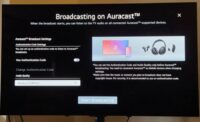
Auracast is a new, globally standardised Bluetooth LE Audio capability that allows a single audio transmitter – such as a microphone, a smartphone, a television, or a public address system – to broadcast high-quality audio to an unlimited number of nearby receivers, including hearing aids and Cochlear.
The difference over traditional Bluetooth – now known as Bluetooth Classic? The older standard only allows a one-to-one pairing.
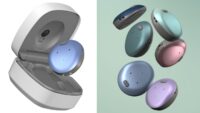
Auracast is more like a radio broadcast, allowing any compatible hearing aid, headphones, earbuds, or cochlear implant to “tune in” to a stream (an Auracast) without the need for traditional pairing codes.

Instead of Bluetooth routing from the transmitter through an intermediary device to the listening device, Auracast connects directly from the transmitter to the listening device. This reduces the latency, so it is near real-time – most people won’t notice any lag at all.
It is no exaggeration to say the sound is crystal clear.
Where can you find Auracast?
Auracast is available in a range of venues.
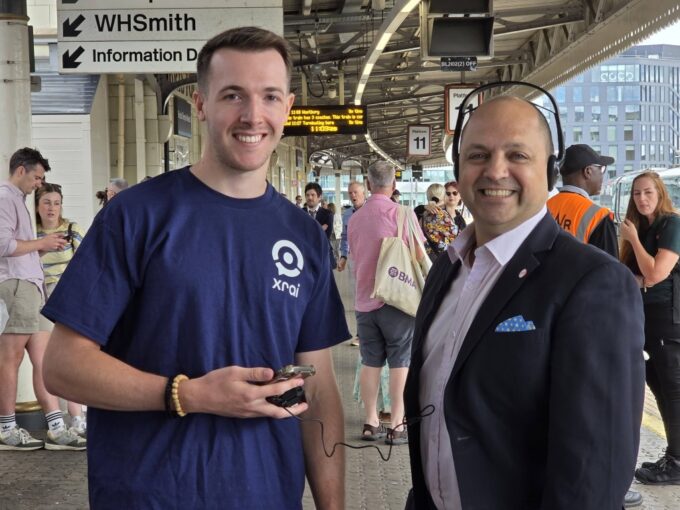
They include theatres, cinemas, concert halls, lecture halls, stadiums, places of worship, railway stations, airports, and homes. These aren’t in the near future; these are places where Auracast is available now, and that list is growing all the time.
Venues that have installed Auracast are encouraged to register them with Bluetooth.com/Auracast and also Google Maps, helping people easily find places near them.
What is the advantage of Auracast over a Telecoil?
In many venues with a Telecoil (loop), people must sit within predefined areas. Auracast allows people to sit anywhere. So, if it’s a date night, the back row is no longer off-limits.
People can bring their own devices; there’s no need to borrow equipment from the venue, and they can’t be sure it will work or be compatible. This means that if they have a preferred device, they can use it.
Auracast has other tricks. For example, speech-to-text converters can provide real-time subtitles.
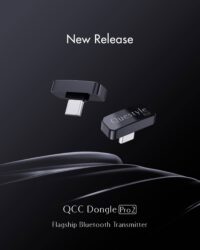
Importantly, Auracast is an open standard. Clients will no longer be required to adopt a hearing aid manufacturer’s ecosystem if they don’t want to. Instead of buying a separate TV streamer, they can buy Auracast-enabled televisions. And if they do want a TV streamer, they can buy one for as little as £45.
The same applies to connectivity with computers, hi-fis, and radios: customers now have a choice, and that is liberating.
They will look to you for clear, helpful guidance on what is possible.
Auracast’s technical foundation: Bluetooth LE Audio
At its core, Auracast is built on Bluetooth Low Energy (LE) Audio. This is not just a minor update; it is a complete redesign of Bluetooth audio handling.
By using the advanced LC3 codec, Auracast delivers significantly higher audio quality while consuming much less power. This codec must support Bluetooth 5.2 or higher, and Auracast must be enabled by the device manufacturer.
For your clients, Auracast’s low energy usage means less drain on their hearing aid batteries, so they last longer even when streaming, and the audio quality remains crystal clear with ultra-low latency.
Why Auracast matters for public accessibility
For decades, we have relied on Induction Loops (Telecoils) or FM systems for public accessibility. While effective, these systems can be expensive to install and maintain. Auracast offers a digital alternative that is:
- It’s scalable: A single transmitter can serve thousands of people in a stadium or theatre. Its transmissions can go up to 100m – Classic Bluetooth is around 10m, so quite a difference.
- It’s multilingual: Venues can broadcast multiple streams simultaneously, allowing users to choose between the main audio, a translation, or an audio description.
- It’s discreet: Users join the stream via an Auracast Assistant. This could be built into their hearing aid’s smartphone app, provided by the phone manufacturer, or via scanning a QR code or Near Field Communication (NFC). This removes the need to queue for bulky venue-owned receivers.
As a clinician, understanding Auracast is essential for advising patients on future-proof technology, as it represents the most significant shift in assistive listening since the introduction of the digital hearing aid.

Aurahear in your inbox!











Leave a comment