

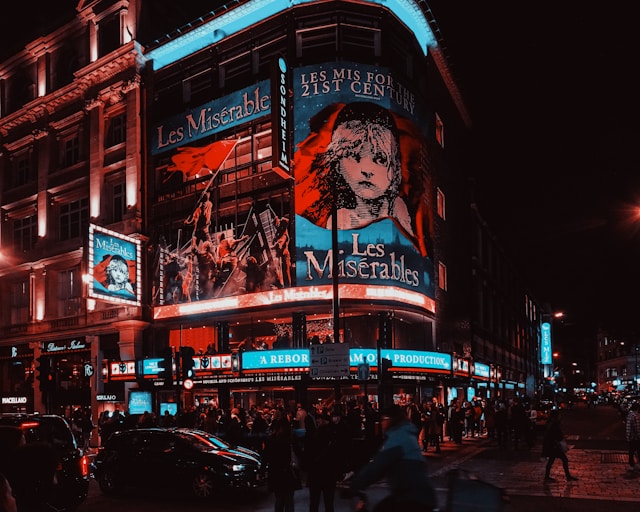
Theatres can present a unique acoustic challenge: the very architecture designed to project a singer’s voice can create echoes and dead zones that make spoken dialogue nearly impossible to follow for those with hearing loss.
In many countries, theatres and other performance centres, such as concert halls, are legally obliged to install an assistive listening solution, complete with receiver units that people can borrow. They rely on technology that can be temperamental, causing frustration rather than happiness.
We are focusing on assistive listening technologies. There are alternatives that may work for some theatregoers, such as sign language interpretation and captioned screens. Relaxed performances may also be beneficial for some.

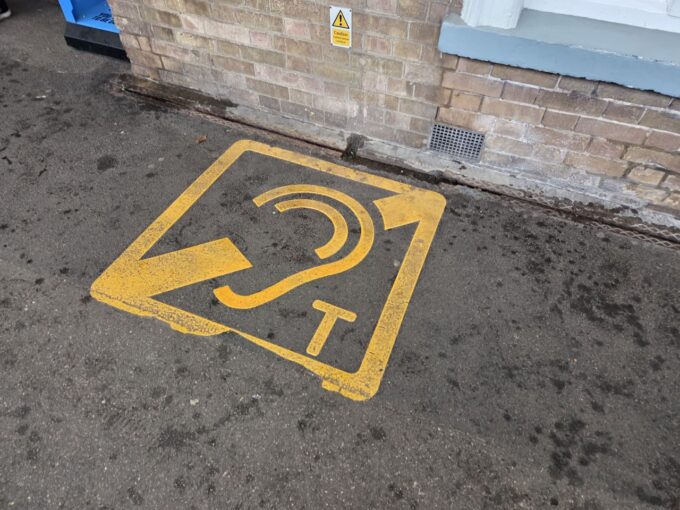
While Telecoils, infra-red (IR) and FM systems have been the standard for years, they are plagued by ‘line-of-sight’ issues: if a patron sits behind a pillar, leans the wrong way, or lets an item of clothing get in the way of the receiver, the signal cuts out.
Or, the setup could be malfunctioning, and the front-of-house doesn’t have a way of testing. One of the most common complaints people have is not knowing how to make the system work and having staff who don’t know either – perhaps they had training on it a long time ago and have forgotten how it works.
With Telecoils, people have to sit in certain areas of the theatre, which can feel like marking them out to others. Not easy when you want to be discreet about your circumstances.
This creates an upsetting and disappointing experience for many theatregoers who want to hear, but can’t use the existing solutions.
Auracast is a fresh way forward that solves so many issues, thanks to its robust Bluetooth LE Audio signal that can penetrate through the “clutter” of a busy auditorium, providing a consistent, high-fidelity experience from the front row to the gods. And if it’s not working for a theatregoer, staff can quickly check by slipping on a pair of Auracast-enabled headphones.
There is more to Auracast than just amplifying the action on stage.
Professional-grade Auracast systems can be plugged directly into the AV desk, enabling a unique sound mix. This means a skilled operator can ensure the balance favours speech over sound effects or music, providing the best possible experience for those who need help hearing.
A multi-channel Auracast transmitter can offer more than just the dialogue. For example, a theatre can Auracast the “Stage Mic” mix for standard assistance, a dedicated “Audio Description” track for the visually impaired, and even a “Director’s Commentary” or “Translation” track for international tourists.
Some Professional systems integrate with existing digital sound desks via Dante, meaning the “clean” audio never has to be converted back to analogue until it reaches the listener’s ear.
Because the latency is under 30 milliseconds – roughly the time it takes sound to travel 10 metres – there is no disorienting “echo” between the live stage sound and the broadcast audio. It feels natural, transparent, and completely integrated into the performance.
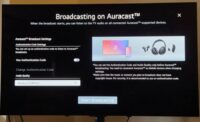
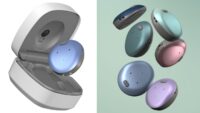
Patrons can easily connect via an Auracast Assistant or simply by scanning a QR code provided by theatre staff. They can also borrow receivers (we call them pebbles as they are a similar size and shape, and loopsets – this offers backwards compatibility with Telecoils or, for those who want a boost.
We suspect most guests will prefer to use their own noise-cancelling earbuds or headphones to “block out” the coughs and rustles of the audience while hearing the actors perfectly.
For the production team, Auracast is a “low-friction” installation: a system can be installed in 45 minutes.
Not convinced? We have covered a wide range of Auracast installations, including the National Theatre, the Delfont Mackintosh group, the Contact Manchester, and Everyman Cheltenham, which was one of the first in the UK to launch such a system.

Aurahear in your inbox!










Leave a comment