


European rail companies have been made aware of the significant advantages Auracast can bring to passenger accessibility, thanks to a new seminar held earlier this month.
The ERCI (European Railway Clusters Initiative) organised the 90-minute event, which featured expert presentations on acoustic design and next-generation assistive listening technology.
The session, held on Wednesday, March 4, was aimed at those who would install Auracast systems into railway stations, trains, and carriages, rather than the general public.

Dr Diana Hirschfeld, CEO and co-founder of Voice Interconnect, opened the event by exploring how train carriages must evolve into spaces that allow people to relax, work, or be entertained.
She demonstrated the challenges of hearing in transport by playing ambient noise from a railway station, noting that 90% of real-time passenger information is acoustic.
“The current mobile and stationary equipment reflects merely operational needs,” she said. “There is still room for improvement.”
She advocated for a holistic, user-centric approach to sound design that optimises everything from sound capture microphones to processing and playback. This will improve passenger satisfaction.
She also highlighted how AI-based sound processing and ‘Sound Cocoons’ could one day help block out external noise, creating private, individual environments for passengers.
The second presentation was given by Jonathan Hoskin, Business Development Manager at Ampetronic.
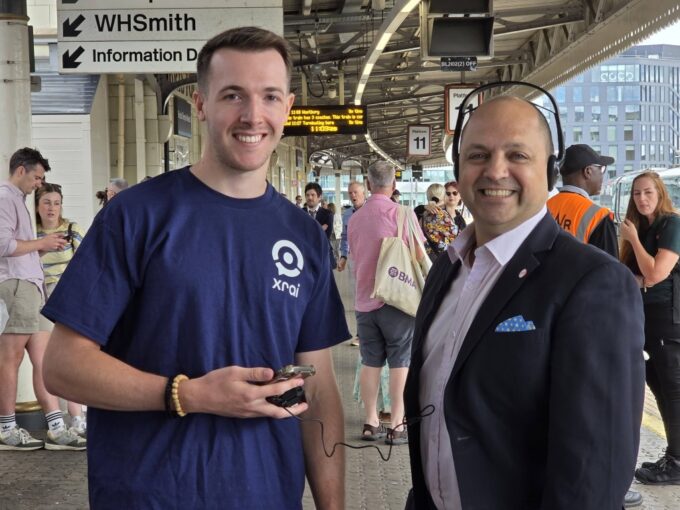
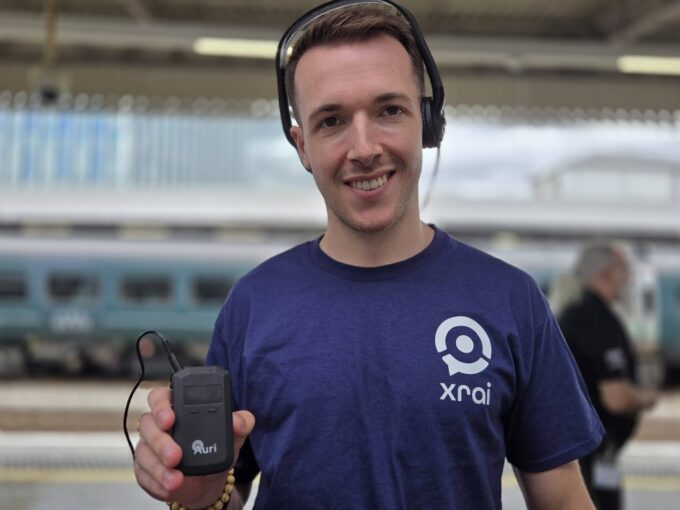
He explored how its Auri system has already made a difference to passengers at Bristol Temple Meads railway station, where transmitters were installed in the ticket hall, concourse, and on platforms.
“Even with excellent public address systems, clarity can suffer with engine noise and with distance,” Mr Hoskin explained. “Assisted listening provides a direct intelligible path for critical information to improve confidence and safety of the passengers who require audio assistance.”
A key takeaway from the session was the “bring your own device” nature of Auracast, which allows users to connect directly to public audio streams using their own smartphones, earbuds, or hearing aids. This removes the need for specialised equipment and helps reduce the social stigma often associated with asking for audio assistance.
Regarding the future of the technology, both speakers emphasised a balanced, hybrid approach.
Mr Hoskin noted that while Auracast is the future of digital audio, it will coexist with traditional induction loops for several years to ensure accessibility for all.
He said that market projections show that by 2028, 80% of new consumer devices will be Auracast compliant, marking a significant step toward widespread adoption.
The seminar, which was conducted in English, is available to watch on YouTube here: https://youtu.be/MNHTKdbtQoM

Aurahear in your inbox!











Leave a comment