

August 2026 is a momentous moment in Auracast’s journey. No longer can we say we are waiting on all major hearing aid manufacturers to get behind the technology: new launches mean they are.
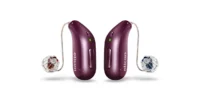
Over the past few weeks, ReSound and Oticon affirmed their commitment to Auracast with the launch of the Sensia and the Reveal, respectively.
ReSound was one of the first companies to implement Auracast in its hearing aids and is committed to ensuring that all its hearing aids have Auracast, where possible, regardless of technology level; some hearing aids are too small or cannot have built-in connectivity.

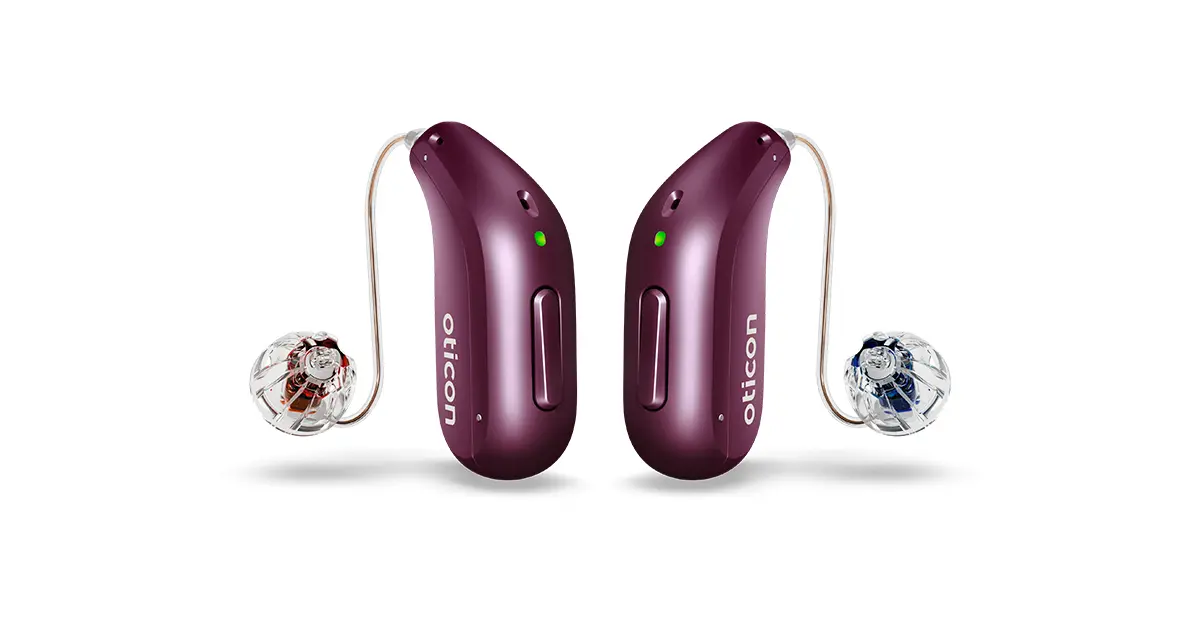
Oticon joined the Auracast party in October last year with the launch of the Zeal and a firmware update to the Intent. It has since followed that, with the Play and Verit, it has now added the Reveal to this lineup.
Starkey has Auracast in two of its aids so far: the Edge AI and the Omega AI, the latter of which was released last October, includes health-monitoring features, and is sweatproof.
Widex, from WSA, released the Auracast-enabled Allure in May. This doesn’t have Auracast in its native app, but those with Android phones such as the Pixel 10 and 11, or the S25 and S26, can use their phone’s built-in Auracast Assistant to connect.
Sister company Signia announced the Pure C&G MaX hearing aid, which will be its first to include Auracast. It’s currently Auracast Ready, but the switch-on is expected in the first quarter of 2027, and use an Assistant built into the Signia phone app to connect.
MaX stands for Multi-adaptive Xperience, and the Denmark-based company says it is the world’s first multi-dimensional AI hearing aid platform. It boasts four DNNs (Deep Neural Networks) that can help people hear in noisy environments.
It also boasts four-way connectivity: Telecoil, Bluetooth Classic, Bluetooth LE Audio, and Auracast. That means most people who opt for this aid will be able to connect to any assistive listening system.
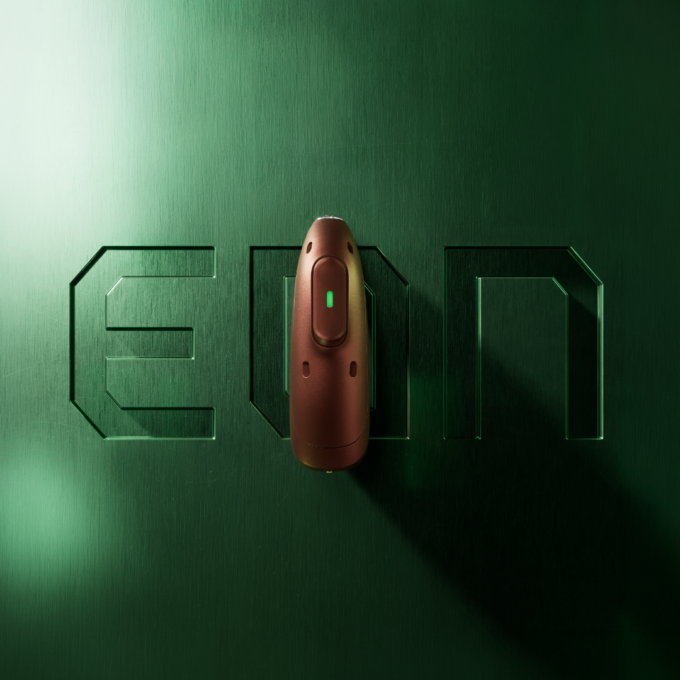
Phonak has announced the EON range, promising clearer speech in noisy environments thanks to its new HYPERSONIC chip. The hearing aids also feature three different ways to connect to the world: Bluetooth Classic, its Roger Direct streaming platform, and Auracast.
But the early version of the Auracast Assistant in the Phonak phone app relies on scanning QR codes to connect rather than clicking on a list of available Auracasts.
However, that’s another article.
For now, we need to celebrate that all of the major manufacturers are now shipping hearing aids with Auracast; we’ve come a long way in a very short space of time. There’s still a long way to go, as the Bluetooth LE Audio technology needs to filter down to older models or lower-specced models so that every price point – or, if you’re in the UK – every NHS hearing aid has Auracast connectivity.
When Auracast becomes the standard in the technology that we wear, it will do three things.
It helps drive demand for Auracast in devices
It helps drive demand for Auracast in venues
It helps Auracast become normal.
Each of the three things is brilliant in its own right, but together it is world-changing stuff.
As we have been documenting at Aurahear.com across this past year, Auracast is appearing in places where assistive listening couldn’t previously be used. It is easier to use, it is more convenient, and for the user, no additional equipment is needed.
It helps drive demand for Auracast in devices
One of the big talking points this week has been from disgruntled Phonak Infinio wearers – many said they bought the hearing aids on the promise that Auracast would be switched on. Two years from that launch, they’re still waiting and have been told they’ll need to wait up to another year.
That’s the demand in action. People are starting to realise that Auracast is arriving and they want it in their devices.
We’ll expect to see more of this in the year ahead, especially if new hearing aids are released to the market without the technology as standard.
Remember, Bluetooth SIG estimates that by 2030, there will be three billion Auracast/Bluetooth LE Audio-enabled devices, including mobile devices, computers and TVs … and hearing aids.
It helps drive demand for Auracast in venues
People who have Auracast receivers naturally want to know where to tune in to an Auracast. They will arrive at a venue and ask staff if the technology has been installed. If the answer is no, some will go on to ask when it will be installed.
Essentially, they become Auracast evangelists in their own right.
Any public space, indoors or out, with announcements or audio over loudspeakers can support Auracast, and those who have it will be demanding it. Once a venue knows there is a requirement, they will start acting on it and the number of installations will snowball.
Here, Bluetooth SIG estimates that by 2030, there will be 2.5 million venues equipped with Auracast. We’d love it if it was in every venue.
It helps Auracast become normal
About 20 years ago, the newspaper I worked for was covering a conference. Such was technology at the time it meant packing up all the office computers, loading them into trucks, unloading them, setting them up and ensuring we had all the right cables in all the right places. Laptops weren’t commonplace, and the way to connect to the internet was via Ethernet cables.
The laptop I took with me had an expansion slot, and into it I put a WiFi card. The venue had Wi-Fi, so why not try using it?
Well, the venue had WiFi, but it didn’t reach every corner. More to the point, it didn’t reach the corner where we had our makeshift office. Instead, it required a 200-yard walk down a corridor and holding the laptop at an angle up in the air.
Now, we turn up at a cafe, a restaurant, a pub, a shopping centre, and just expect WiFi. We don’t even ask for it, it’s just there on demand. It’s on trains and planes too: all at the push of a button. We don’t even think twice about it.
That is ultimately where we’ll be heading with Auracast. It’s just normal. It’s just there. One button press, one NFC tap, and we’re connected.
Exciting times ahead
August 2026 is an exciting month, with all major hearing aid brands now on board with Auracast. There will be no going back from this moment, only going forward.
While Starkey, ReSound, Oticon, Phonak, Widex and Signia are all now Auracast brands, there are also smaller, specialist brands, over-the-counter (OTC) manufacturers and earbuds with hearing-aid features.
The result is Auracast becomes an everyday, mundane part of life. The norm. Just another expected feature, and this website is no longer needed. We can’t wait.

Aurahear in your inbox!













Leave a comment